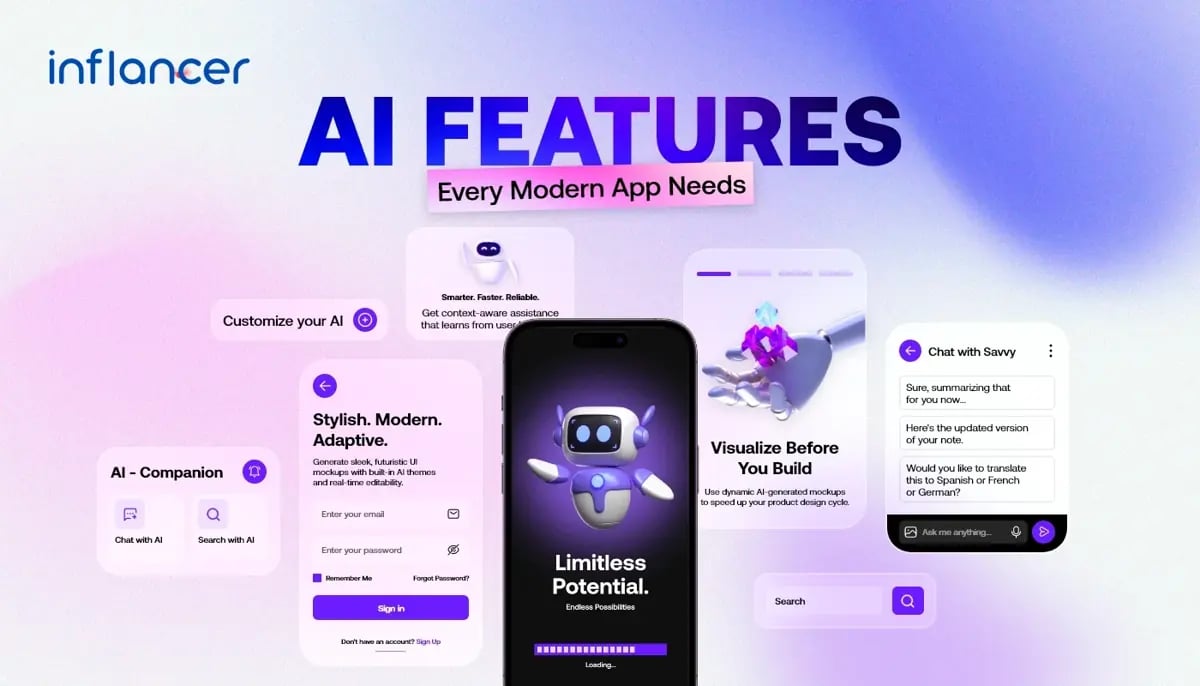
AI isn’t some far-off idea anymore! It’s part of our everyday lives, powering the apps we rely on most. A few years back, AI was something only big tech companies talked about. Today, AI is embedded in the apps we use to shop and the modern tools we use to learn and work.
Users now expect more than fast-loading screens or sleek design; they want apps that feel smart, respond quickly, and adapt to their needs. That’s where AI shines. It delivers real-time personalization, detects fraud, predicts trends, and takes over repetitive tasks, making apps more helpful and businesses more efficient. It’s no longer a bonus feature. It’s a new standard.
In the US, more than two-thirds of businesses are integrating AI into mobile apps, and figures are even higher for digital platforms in the UK, at over 70%. And the number of AI-powered mobile apps is only increasing. Why? Smart apps win out and old ones fall far behind.
This article will guide you through the top AI features in mobile apps to consider in 2025. Whether you’re developing a new app or upgrading an existing one, these are the features that will help prevent you from falling behind and make sure that what you build is something that users actually love to use.
Why AI Integration is Essential in Modern Apps?
Mobile apps are evolving, and a trend such as AI integration in app development is not a matter of choice anymore. In the context of apps, AI helps automate tedious processes and create hyper-personal experiences by helping apps become more self-sufficient in how they respond to user interaction.
Key Benefits of AI in Mobile Apps:
AI helps apps learn, adapt, and improve over time, delivering more value with every interaction.
- Increased Automation: Reduce manual effort and operational overhead.
- Improved User Engagement: Personalized content and recommendations.
- Cost Efficiency: Lower support and development costs over time.
- Competitive Advantage: Differentiation in saturated markets (especially USA & UK).
Best AI Features to Integrate in Apps
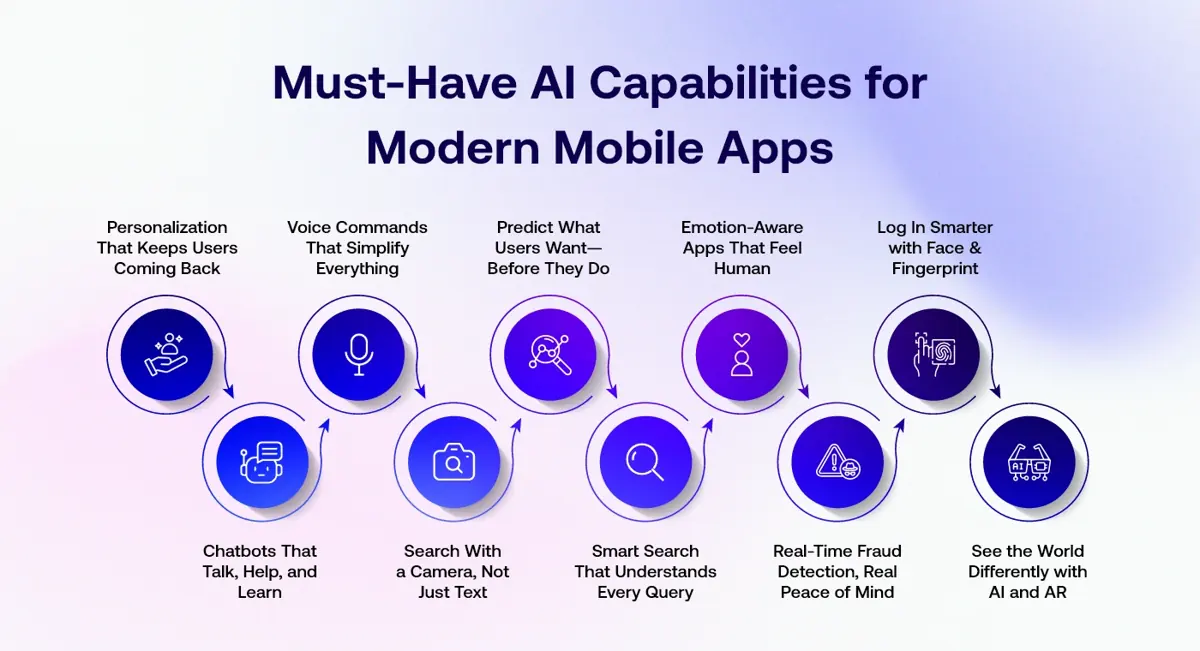
AI features can transform how users interact with your app, boosting engagement, personalization, and performance. Explore below the list below to discover the most valuable AI capabilities to integrate in 2025 and stay ahead in a competitive digital market.
1. Personalized Recommendations
AI-driven personalization allows you to personalize content, product listings or features not only on history, location or preferences of your users. It’s a tried and true method for keeping users engaged and coming back.
Use Case: Ecommerce business apps, which recommend similar or trending products according to browsing behavior.
For Example: Companies such as Amazon and Netflix employ collaborative filtering algorithms to customize their user experience.
What it offers:
- Increases retention and user satisfaction
- Drives more in-app purchases and clicks
- Shortens the user decision-making process
Ready to personalize every tap and scroll?
2. Chatbots & Virtual Assistants
NLP driven virtual assistants can help answer FAQs, assist users, and deliver support in real-time. They reduce reliance on human agents but keep service high, reacting more quickly, handling multiple queries at once, and learning over time to become more accurate and relevant. This is a win-win for businesses and users, as it not only improves customer satisfaction but also lowers operational costs.
Use Case: Banking and healthcare apps offering 24/7 chat support.
Example: Cleo Finance (UK) uses conversational AI to simplify financial planning.
How it is helpful:
- Handles large volumes of inquiries
- Available 24/7 without staff scaling
- Enhances customer service
3. Voice Recognition & NLP
Voice search and command-based navigation are becoming integral to modern apps. NLP enables applications to understand, interpret, and respond to human language naturally, making it one of the key features of artificial intelligence for delivering more intuitive and personalized user experiences.
Use Case: Voice-enabled search in shopping or smart home control apps.
Example: Google Assistant integrations in productivity and calendar apps.
Benefits:
- Speeds up user actions by smart voice input and real-time command recognition.
- Improves app accessibility for visually impaired users with voice-guided support.
- Enables voice-powered and hands-free app navigation for easier daily interactions.
4. Image Recognition & Visual Search
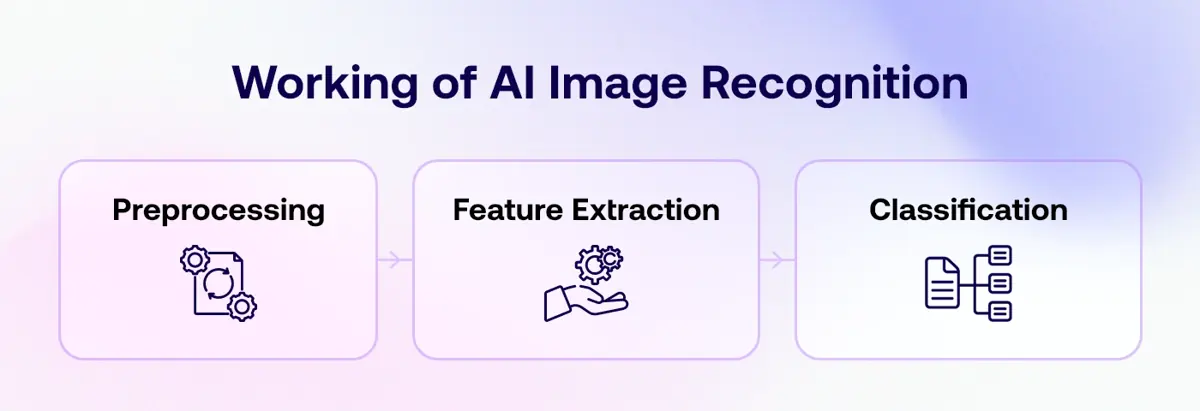
AI-powered image recognition is transforming how users interact with digital platforms. Modern apps can instantly identify faces, products, barcodes, and various objects with exceptional accuracy. By integrating advanced image analysis capabilities, businesses can deliver faster search experiences, automate tasks, and provide more intuitive user journeys. This innovation not only enhances real-time decision-making but also elevates overall app performance, making it a key driver of smarter visual search solutions.
Use Case: Visual product search in fashion and furniture apps.
Example: Pinterest Lens allows users to find similar items using their camera.
Why AI is critical:
- Delivers faster, smarter, and more intuitive search experience.
- Adds extra security with face recognition login feature.
- Boosts social sharing with filters, tags, and effects.
5. Predictive Analytics
Using data trends, AI can predict future user behavior, helping apps become proactive by offering the next best action before users even request it. With end-to-end AI app development solutions, businesses can enhance personalization by processing user behavior and preferences in real time. AI can also reduce churn by identifying user drop-off points and improving the overall user experience.
Use Case: Health tracking apps forecasting activity goals or calorie needs.
Example: Spotify recommends songs based on user listening behavior using AI prediction models.
Read more: The Ultimate Guide to Best Predictive Analytics Tools in 2025
6. AI-Powered Search
With the help of AI-powered search, it becomes easy to save users time, reduce bounce rates, and improve user satisfaction. A smart search engine understands user intent and returns the most relevant results. It can auto-correct, suggest popular queries, and even respond to natural language.
Use Case: Search tools in large content libraries or retail catalogs.
Example: Etsy uses AI search to display customized product listings.
Want users to find what matters, instantly? Create a Search Experience They’ll Love with Inflancer’s AI Experts.
7. Emotion & Sentiment Analysis
Apps can analyze text, voice, or facial expressions to understand user sentiment. This helps tailor app behavior or content based on emotional signals.
Use Case: EdTech or mental wellness apps adjusting content tone based on student or user mood.
Example: Woebot, an AI mental health coach, uses tone detection to provide empathetic responses.
What are its Advantages:
- Creates emotionally intelligent user flows that feel natural and personalized.
- Improves user trust and app stickiness through thoughtful, adaptive interactions.
- Enables real-time content adaptation based on user behavior and preferences.
8. Fraud Detection & Security Improvements
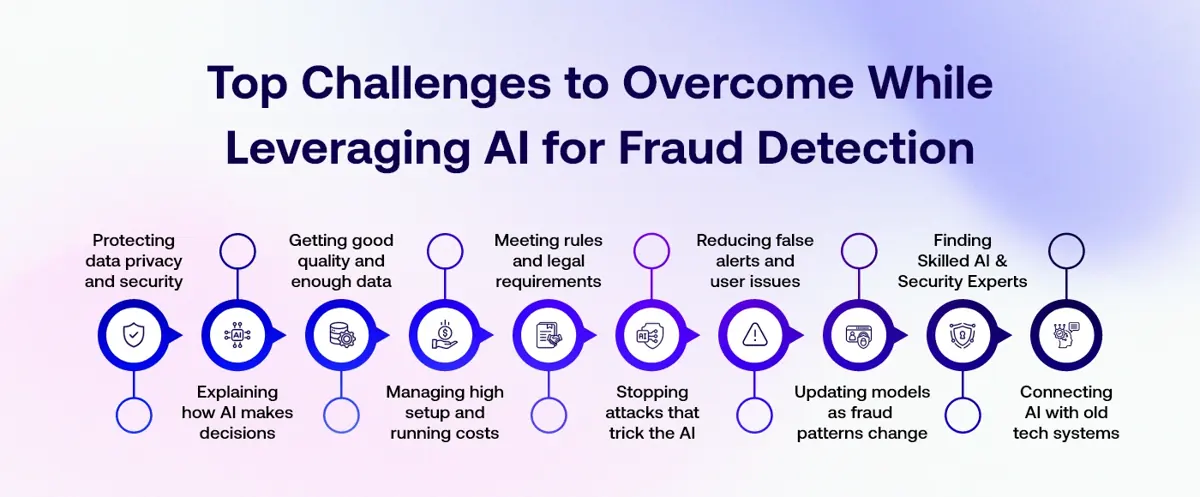
AI can identify suspicious activity in real time that could put a halt to fraudulent transactions or bot attacks. Monitoring user behaviour constantly to catch out anyone who is stepping out of line can advise the right people before an attack is made. This is preventive insurance leading to trust from users and reducing financial risk for companies.
Use Case: Mobile wallets and banking apps built to detect unusual behaviors in payment and login usage.
Example: Revolut (UK) is an artificial intelligence-based service that monitors the accounts of its users, tracks their spending patterns and ensures they are not fraudulent, which makes it the guardian of people’s money and data, through its technology.
What it provides:
- Instills a user with confidence against smarter attacks, one more protective layering.
- Boosts the safety of their app by analyzing frauds on the fly.
- Decreases false positives in fraud detection with the help of Adaptive AI models.
9. Face & Biometric Recognition
Facial recognition, fingerprint scans and other biometric measures allow you to log in or verify your identity without a password. These methodologies more or less give you that little bit of security while at the same time keeping the user experience fast, easy and user friendly. They reduce the scourge of password fatigue and cut down on unauthorized browsing, and they’re quickly becoming a de facto standard at a time when so many applications handle sensitive or financial information.
Use Case: Secure logins for healthcare and fintech mobile applications.
Example: Apple Face ID for secure mobile payments and logins.
Why It Works:
- Adds an extra layer of security for trusted, worry-free access.
- Makes access easier and quicker, even in busy situations.
- Eliminates the need to remember passwords across multiple apps.
10. AI-AR Integration & Smart Cameras Usage
The combination of Artificial Intelligence and Augmented Reality also gives rise to smart camera features like translation, virtual try-ons and contextual overlays. This merger enriches interaction by combining digital content with the user’s view of the world, creating a more appealing personal experience.
Use Case: Travel apps giving the benefits of instant translation or guides through AR lenses. But you should know the right prelaunch checklist for these apps.
Illustration: Google Translate AR scans and translates signs in real-time.
Real Value for Users:
- Turns everyday moments into rich, digital experiences.
- Helps users understand and explore surroundings effortlessly.
- Brings added excitement to travel and shopping journeys.
Read more: Why Hiring Full-Stack Developers Makes More Sense for Complex Projects
How to Choose the Right AI Features for Your App
Choosing the right features of AI starts with the right understanding of your business requirements and user behavior. Talk to your development team or partner with a company that specializes in custom app development with AI to avoid over-engineering and ensure usability.
Consider:
- Industry Fit: You’re going to want NLP for healthcare, you’re going to want visual recognition for retail.
- User Base: Tech-savvy users vs. for casual users
- Infrastructure: Does your back-end have the capabilities to process large scale data?
- MVP vs Full Suite: Begin small and grow big.
Case Studies
Babylon Health (UK): Uses AI chatbots to triage patient symptoms and assist with remote diagnoses. This reduces appointment load and accelerates patient care.
Cleo Finance (USA/UK): Offers financial coaching via conversational AI. Resulted in a 35% increase in monthly active users.
TikTok: Personalizes content feeds using AI and sentiment analysis, keeping engagement rates above 90%.
Read Also: Top AI Business Ideas for 2025
Future AI Trends in Mobile App Development
AI in apps is evolving rapidly. Investing in ethical and adaptive AI is crucial for long-term success. Here’s what’s ahead:
- Edge AI: More real-time processing on devices for privacy
- Federated Learning: Protects user data while training AI models
- Context-Aware AI: Adjusts app behavior based on environment or location
- Regulation-Ready AI: GDPR and CCPA-compliant implementations
Why Inflancer Is Your AI Integration Partner?
Inflancer is paving the way for startups and enterprises to implement AI-powered mobile apps and web development company in Canada and be up there in the competition to stand apart from intelligent, scalable and futuristic AI driven mobile apps servicing the U.S, UK and MENA regions.
Whether it’s strategy, design or deployment, we make sure you build features that directly impact your business. We come with deep technical expertise in NLP, computer vision, predictive analytics, and packed with strong UI/UX skills.
Conclusion
Integrating the right AI features in mobile apps gives you the tools to not only attract users, but keep them, understand them, and serve them better. As in, artificial intelligence technology continues to advance, apps must become more adaptive, more secure, and more personalized.
Incorporating the correct AI capabilities in your mobile apps enables you to do more than just attract users: keep them, understand them, and serve them better. As AI advances, apps need to be increasingly adaptable, secure, and customized.
If you’re ready to leverage AI application development, or want to the impact AI has on your business, begin with clear goals, select a set of scalable features, and gain a partner that understands how to leverage AI in practice.
Build Your AI-Powered Mobile App With Inflancer Now.
Get the weekly updates on the newest brand stories, business models and technology right in your inbox.