Everyone’s talking about AI agents, and for good reason. These intelligent, autonomous programs are revolutionizing business operations across industries, from streamlining customer service to optimizing complex supply chain logistics. Designed to perceive their environment, process information, and make decisions independently, AI agents boost operational efficiency, reduce costs, and offer a serious competitive edge.
But as more companies look to adopt AI agents, one big question keeps coming up: How much does it actually cost to develop one? The answer isn’t black and white. Costs can vary widely depending on how advanced the AI needs to be, what specific tasks it must perform, and the development path you choose, whether it’s in-house, outsourced, or hybrid.
In this comprehensive guide, we’ll break it all down. From exploring the different types of AI agents development and their ideal use cases to dissecting the key cost drivers and smart ways to optimize your investment, you’ll walk away with real-world insights and practical knowledge to make informed decisions and maximize ROI.
Understanding AI Agents
At their essence, AI agents are software entities that operate autonomously to perform tasks on behalf of users or other programs. They differ from traditional software in their ability to adapt to changing environments and learn from data inputs, enabling them to improve their performance over time without explicit reprogramming.
Key Capabilities of AI Agents Include:
- Autonomy: Operating without constant human intervention.
- Learning: Improving performance by learning from data and experiences.
- Decision-Making: Making informed decisions based on data analysis and predefined objectives.
These Smart Assistants Are Employed Across Various Industries:
- Customer Service: AI-powered chatbots handle inquiries, reducing response times and improving customer satisfaction.
- Healthcare: Virtual health assistants and AI agents in healthcare provide patients with information and support, enhancing patient engagement.
- Finance: AI agents analyze market trends to assist in investment decisions.
- Retail: AI Shopping assistants maximize retail sales, suggest products as per user preferences and behaviors.
The versatility and adaptability of AI agents make them valuable assets in modern business operations. According to market statistics, the AI agent market is expected to grow from $5.1 billion in 2024 to $47.1 billion by the end of 2030.
Ready to Enhance Your Business with AI Agents?
Businesses leveraging AI agents are already seeing game-changing results:
1. 30-50% boost in productivity across operations
2. Up to 25% reduction in operating costs, according to McKinsey
3. 2.5x increase in customer satisfaction with AI-powered support
AI agents don’t just automate, they learn, adapt, and optimize outcomes in real time. Get a free consultation with Inflancer’s AI experts and discover how to design, develop, and scale intelligent agents.
Cost Variations by AI Agent Types
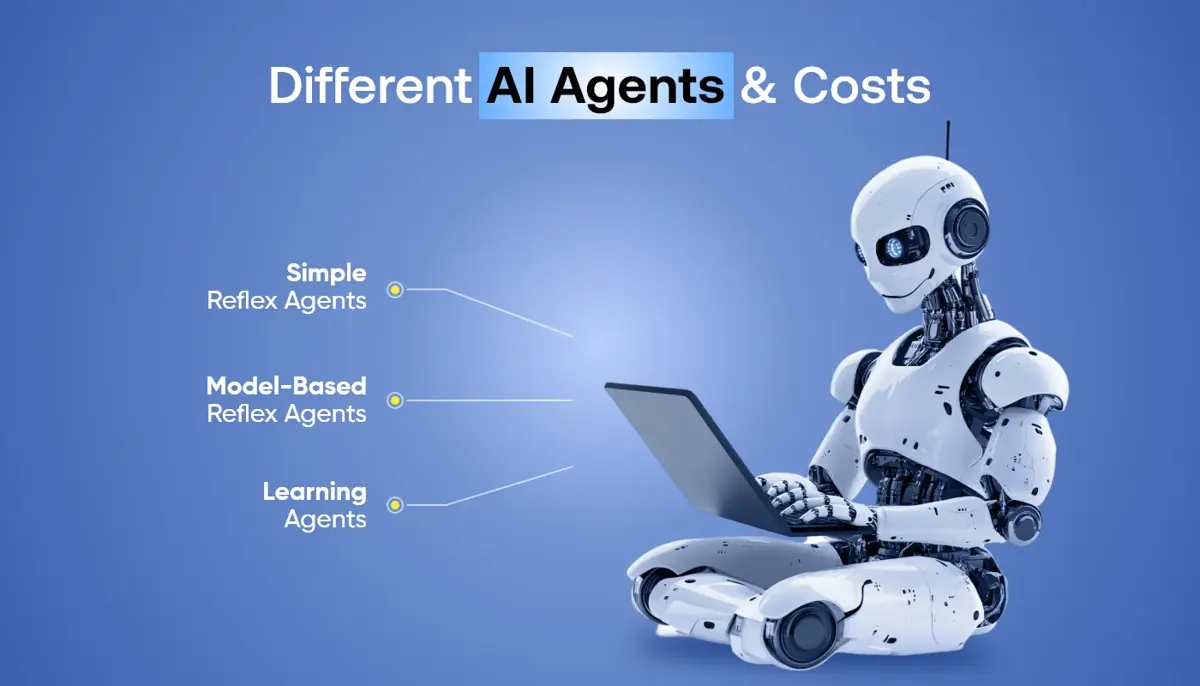
The development cost of an AI agent is significantly influenced by its type and complexity. Here’s a breakdown of common AI agent classifications and their associated costs with attention to the differences between single agent vs multi agent systems:
1. Simple Reflex Agents
These agents operate on a set of predefined rules, responding directly to specific inputs without considering historical data.
Functionality: They perform straightforward tasks based on clear conditions. For example, a simple reflex agent in customer service might automatically respond to frequently asked questions with predetermined answers.
Typical Cost Range: Development costs for simple reflex agents typically range from $5,000 to $20,000. This affordability makes them accessible for small to medium-sized businesses looking to automate basic tasks.
Use Cases:
- Automated Email Responses: Sending standard replies to common customer inquiries.
- Basic Chatbots: Handling simple customer service interactions on websites.
- Notification Systems: Alerting users about specific events or updates.
While cost-effective, these agents are limited to the scenarios they are explicitly programmed for and cannot adapt to new situations without manual updates.
2. Model-Based Reflex Agents
These agents maintain an internal representation of their environment, allowing them to make decisions based on both current inputs and historical data.
Functionality: By considering past interactions and environmental context, model-based reflex agents can handle more complex tasks than simple reflex agents. For instance, a model-based agent in e-commerce might adjust product recommendations based on a user’s browsing history and current trends.
Typical Cost Range: Developing these agents can cost between $20,000 and $100,000. The increased cost reflects the complexity of creating and integrating the internal models necessary for their operation.
Use Cases:
- Recommendation Systems: Suggesting products or content based on user behavior and preferences.
- Dynamic Pricing Models: Adjusting prices in real-time based on market demand and competitor pricing.
- Energy Management Systems: Optimizing energy consumption by learning from usage patterns and external factors.
These agents offer a balance between functionality and cost, making them suitable for businesses aiming to implement more adaptive AI solutions without the investment required for more advanced agents.
3. Learning Agents
Learning agents possess the capability to improve their performance over time through machine learning techniques, adapting to new data and evolving environments.
Functionality: They can perform complex tasks that require pattern recognition, predictive analytics, and decision-making under uncertainty. For example, a learning agent in finance might analyze market data to predict stock trends and inform trading strategies.
Typical Cost Range: The development of learning agents is more resource-intensive, with costs typically ranging from $50,000 to $300,000 or more, depending on the complexity and scope of the project.
Use Cases:
- Predictive Maintenance: Anticipating equipment failures before they occur to schedule timely maintenance.
- Fraud Detection: Identifying unusual patterns in transactions that may indicate fraudulent activity.
- Personalized Marketing: Crafting individualized marketing messages based on customer behavior and preferences.
While the initial investment is higher, learning agents provide significant value through their ability to adapt and optimize performance over time, leading to long-term benefits for businesses.
Key Cost Factors in AI Agent Development
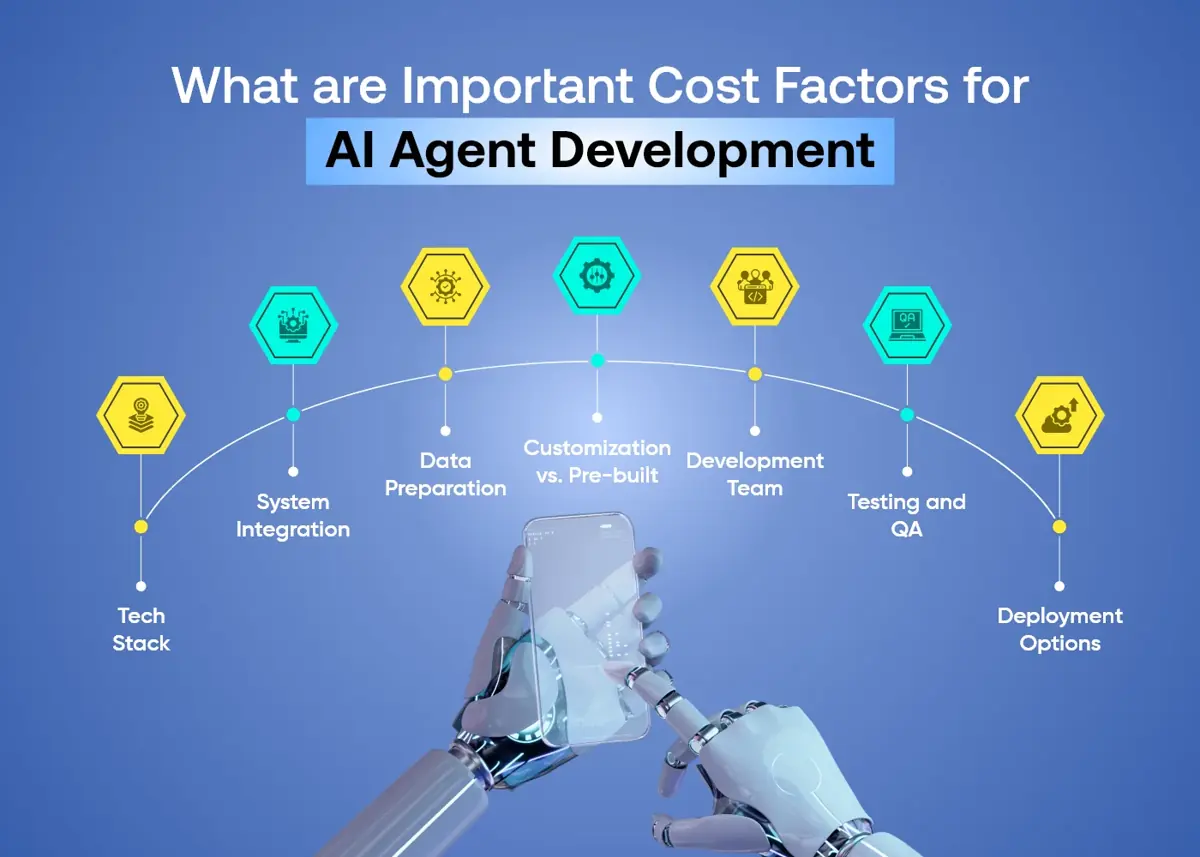
Building an AI agent isn’t a one-size-fits-all job. The final price tag depends on a mix of technical choices, team expertise, and how well it fits into your existing setup. Here’s a breakdown of what influences the cost, and what to keep in mind as you plan.
1. Your Tech Stack: Open-Source Vs. Proprietary
The tools, frameworks, and AI software development technologies you choose set the foundation for your project and influence the overall budget. Open-source options like TensorFlow and PyTorch can help reduce development costs, though they may require more customization and engineering effort. Proprietary platforms can accelerate development with built-in capabilities and enterprise support, but they typically come with higher licensing and implementation costs.
2. Integration with Existing Systems
How easily your AI agent plugs into your current tools and workflows can be a make-or-break factor. The more custom integration and backend work needed, the more hours (and dollars) it’ll take. It’s good to evaluate your tech ecosystem early to avoid surprises later.
3. Data Prep: The Hidden Giant
Data is everything in AI, and messy, incomplete data can eat your budget alive. From gathering, cleaning, labeling, and formatting, this stage is often one of the most time-consuming. If you’re wondering how much AI agent cost, remember that the quality and readiness of your data play a major role in the overall investment. Start planning your data strategy early, as it’s where most AI projects get stuck.
4. Customization vs. Plug-and-Play Algorithms
Want a solution tailored to your exact business needs? That takes time, expertise, and budget. Pre-built algorithms can save money but may not cover everything. Custom models offer flexibility but require more investment. Also, choose customization only where it adds real business value.
5. Your Team: In-House vs. Outsourced Talent
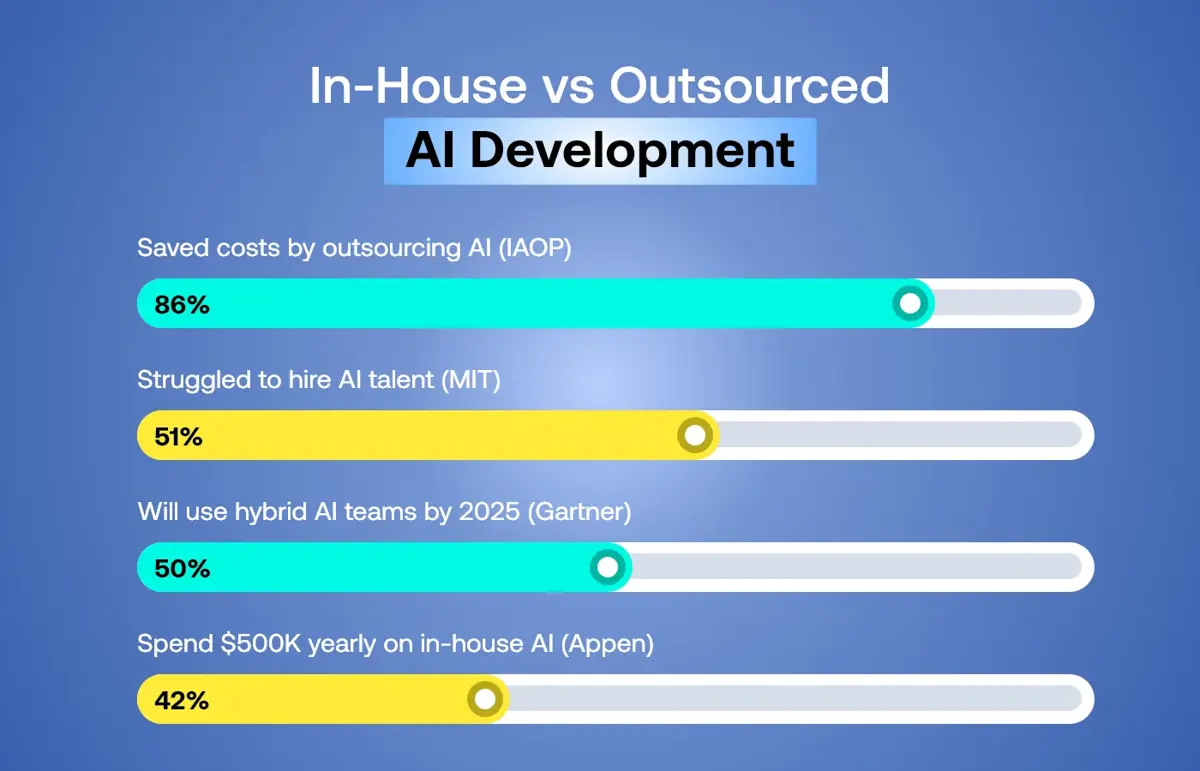
Hiring AI developers is not inexpensive. Building a team with the right skill set, data scientists, ML engineers, QA testers, adds up fast. Outsourcing to a specialized team often reduces costs and accelerates timelines. Balance quality and cost by mixing internal knowledge with external expertise.
6. Testing and QA: Don’t Skip It
Your AI agent isn’t ready until it’s been thoroughly tested, performance, security, ethical behavior, and edge cases all need coverage. Testing may add time, but skipping it risks poor performance or worse, system failures. Allocate budget for testing just like you would for development, it’s insurance for your investment.
7. Deployment: Where Will It Live?
Where and how you deploy an Artificial Intelligence assistant affects both initial and ongoing costs. Think beyond launch, consider security, scalability, and future costs when choosing a deployment model.
- Cloud (AWS, Azure, GCP): Scalable, flexible, great for starting small. But recurring costs can grow with usage.
- On-Premises: More control, better for strict data/privacy needs, but requires upfront infrastructure investment.
- Hybrid: Sensitive workloads run locally, the rest in the cloud, a good balance for many enterprises.
Read Also: AI App Development: A Step by Step Guide
The AI Agent Development Process & Costs
Understanding the AI software development lifecycle helps in estimating both timelines and budget requirements.
1. Requirements Analysis & Planning
This initial phase involves defining the problem, outlining functional requirements, establishing KPIs, and selecting the right type of AI agent.
- Cost: $5,000-$15,000
- Time: 2-4 weeks
Note: This is the most critical stage. Misalignment here can lead to costly changes later.
2. Data Collection & Preparation
Data is the lifeblood of AI. This stage involves identifying relevant datasets, acquiring third-party data (if needed), cleaning it, and labeling it for training.
- Cost: $10,000-$50,000
- Time: 4-8 weeks
Stats: According to IBM, 80% of AI project time is spent on collecting, cleaning, and organizing data.
3. Model Development & Training
Here, developers build algorithmic models using ML techniques such as supervised, unsupervised, or reinforcement learning.
- Cost: $20,000-$100,000+
- Time: 6-12 weeks
Consideration: Costs rise steeply with the complexity of the use case and data.
4. Integration & Testing
The AI agent is integrated into the business ecosystem and tested rigorously, both functionally and for performance. Testing includes real-world simulations, A/B testing, and ethical evaluations.
- Cost: $10,000-$30,000
- Time: 3-6 weeks
5. Deployment & Monitoring
After final QA, the agent is deployed in the production environment. Real-time monitoring is set up to track performance and trigger alerts for anomalies.
- Cost: $5,000-$20,000
- Time: 2-4 weeks
Building an AI Agent Is a Journey!
Let’s make it efficient, scalable, and impactful! Inflancer is here to connect the dots between idea and implementation.
AI Agent Development Cost Optimization Strategies
AI doesn’t have to come with a sky-high price tag. Here are simple, strategic moves to keep your project lean, focused, and budget-friendly, without compromising on impact.
1. Use Open-Source Tools
Frameworks like TensorFlow and Hugging Face are free, flexible, and widely trusted—no licenses, just results.
2. Start with an MVP
Go for MVP development and build only what you need to prove value. Test it, learn from it, then expand.
3. Customize Pre-Trained Models
Why build from scratch when you can tweak existing models like GPT-4? It’s faster and way more cost-efficient.
4. Be Smart with Cloud Usage
Start small with pay-as-you-go. Scale later with cost-saving plans like reserved or hybrid options.
5. Outsource to Experts
Hiring a full team is pricey. Outsourcing gives you top-tier skills and speed, often at half the cost.
6. Scale in Steps
Don’t try to do everything at once. Build, validate, and grow in phases.
7. Plan Before You Build
Clear goals and documentation save you from costly rework later. It’s the simplest way to avoid surprises.
Related reading: Top 10 AI Agent Development Companies in USA 2026
Why Partner with Inflancer?
At Inflancer, we help enterprises and startups alike build scalable, efficient, and intelligent AI agents tailored to their business goals. It is one of the well established AI development in Canada as well & enables the business to utilize the AI benefits in their business operation.
- Expertise: Over a decade of experience in AI/ML and product engineering.
- Methodology: Agile, sprint-based approach with full transparency.
- Cost Optimization: Leveraging reusable components, open-source, and cloud-native solutions to reduce overhead.
- Success Stories: From intelligent retail assistants to AI-driven diagnostics, our solutions have helped clients reduce operating costs by up to 40%.
Conclusion
AI agents are transforming how businesses automate customer service, optimize operations, and improve decision-making. While development costs can range from $5,000 to $500,000 or more, businesses can reduce expenses with smart planning, MVP strategies, open-source tools, and the right development partner. Starting with free AI consulting services can also help identify the most cost-effective AI strategy and maximize ROI.
Get Tailored Cost Estimate and Strategy from Inflancer’s AI Experts—Built Around Your Business Goals.
Frequently Asked Questions
Get the weekly updates on the newest brand stories, business models and technology right in your inbox.