

inflancer
Yatra logo
Case study · Ride Sharing App

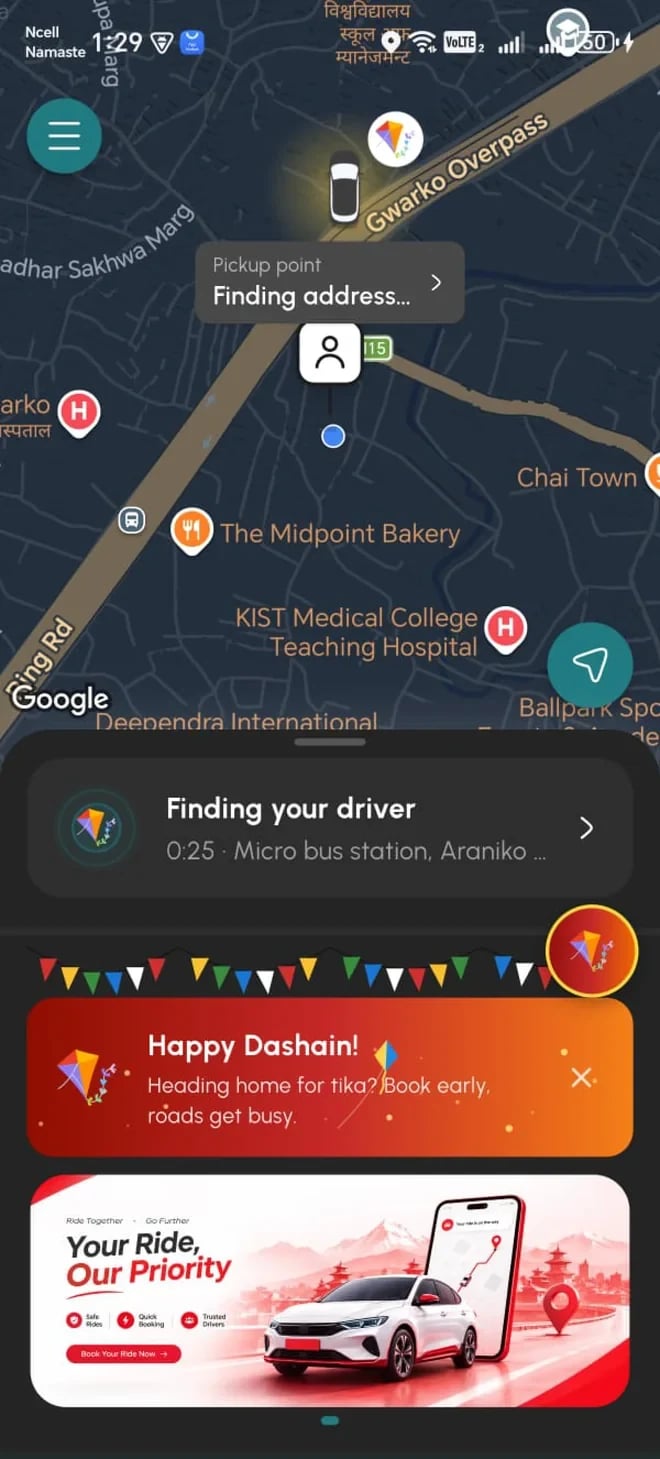
Bikes, cars and parcels, tracked live on the map.

Yatra is a ride-sharing app for bikes, cars and parcels. Riders set a pickup and drop-off, choose a ride and a fare, and follow their driver live on the map. Behind it sits the driver app and the operations tooling that keep a marketplace of trips running.

Industry
Transport and logistics
Platforms
iOS, Android, Web
Market
Nepal
Yatra
Yatra
Yatra

Why Yatra

What the product gets right

01

Three kinds of trip

Bikes for quick city hops, cars for comfort and parcels for sending things, all from one app.

02

Clear fare choice

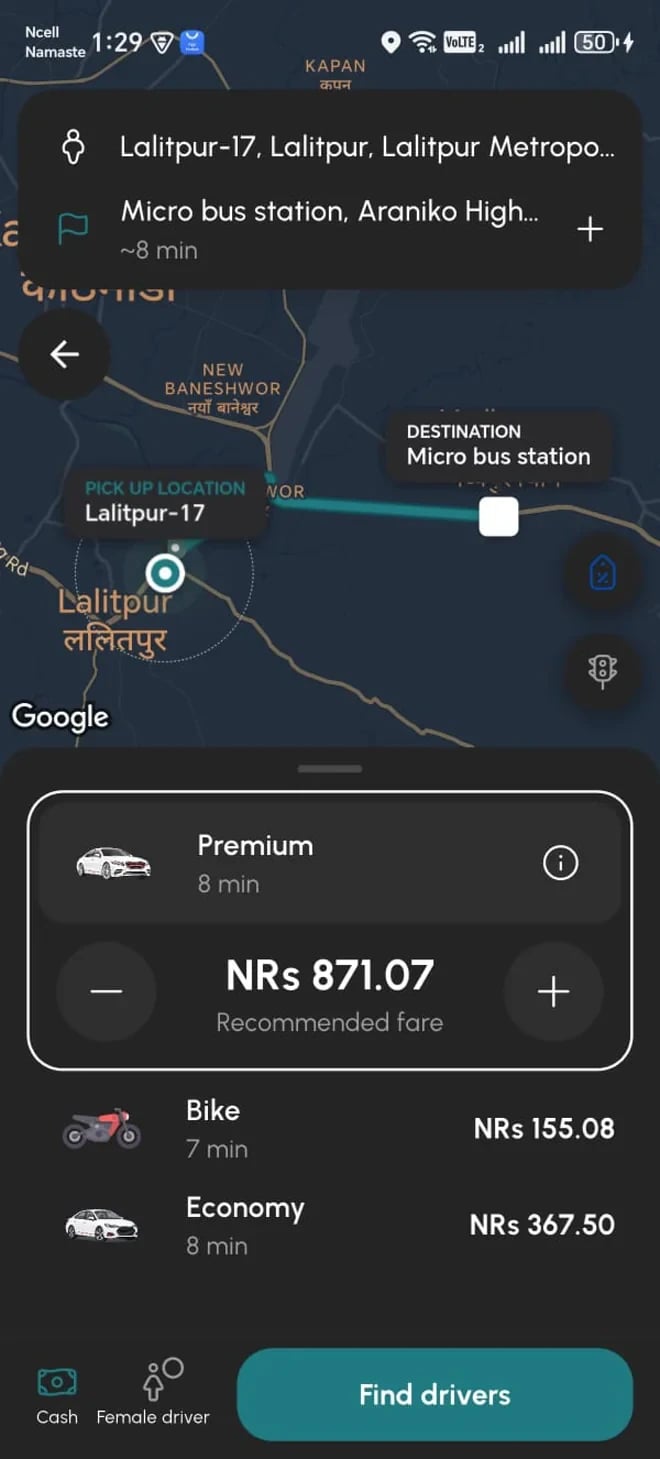
Riders pick a ride and a fare before they commit, so the price is understood before the trip starts.

03

Live tracking

The driver appears on the map in real time, which turns waiting from worry into information.

04

Simple booking

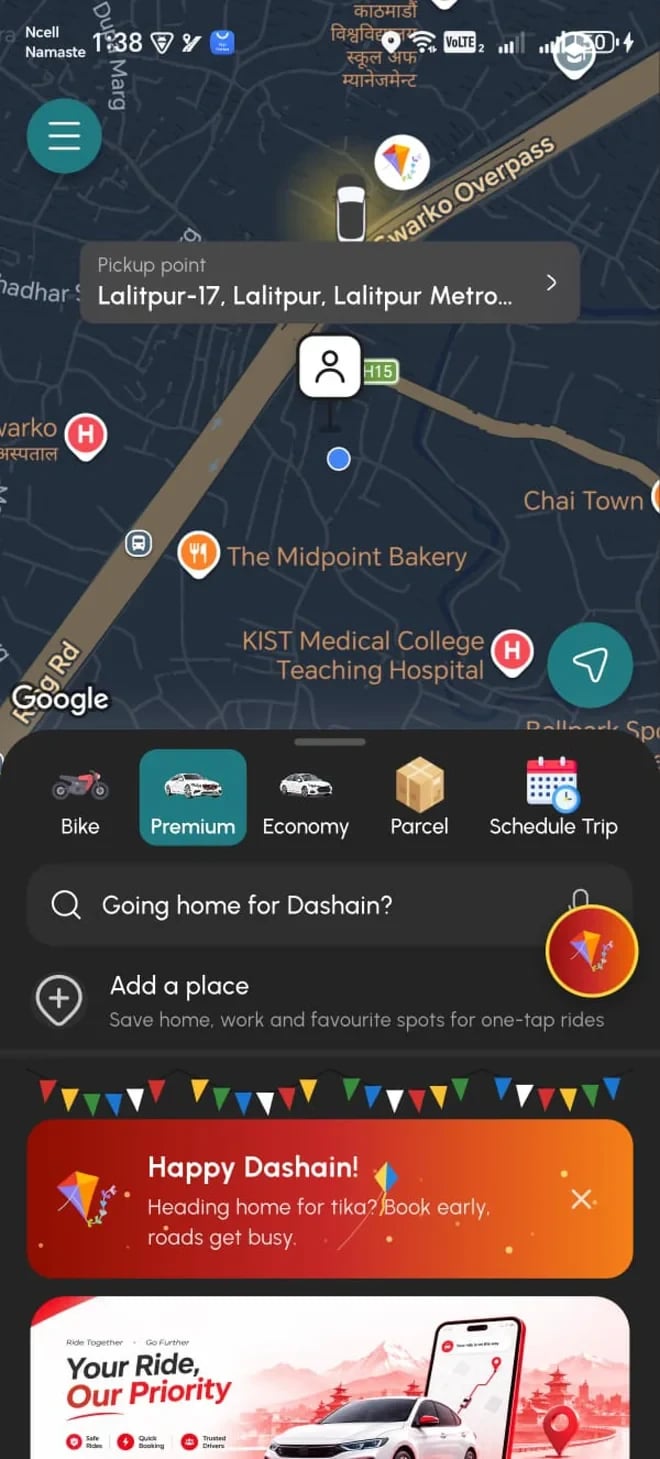
Pickup, drop-off and ride type are the only decisions, and the screen is built around them.

05

A driver app that earns trust

Drivers see requests clearly, accept quickly and track what they have earned.

06

Built for local roads

Maps, addresses and landmarks reflect how people in Nepal actually describe places.

07

Operations in view

The team can see trips, drivers and issues in one place and act on them.

08

Ready to scale

New vehicle types, new areas and new services can be added without starting over.

Overview

The Yatra story

Ride sharing looks simple from the outside: you tap a button and a vehicle arrives. In reality it is one of the most demanding kinds of product to build, because it is a live marketplace with two sides who both need to be happy at the same moment. Riders want a vehicle soon, at a fair price, with a driver they can follow. Drivers want a steady flow of trips they can accept with confidence. Yatra brings both together for bikes, cars and parcels.

The core experience is easy to describe. A rider sets a pickup point and a drop-off, chooses the kind of ride and the fare, and then follows the driver live on the map. A parcel works the same way: instead of a passenger, there is something to deliver. Keeping that flow short and obvious, while a great deal of coordination happens behind the screen, was the central design task.

We worked on the complete product: the rider app, the driver app and the operations tooling that ties them together. A ride-sharing business is not only an app. It is a system for matching, pricing, tracking, paying drivers and handling the unexpected, and we designed those parts together so that what a rider sees on the map and what a driver sees in their queue are always two views of the same trip.

What stands out about Yatra is how much of the work is invisible when it goes well. When a trip is requested, matched, tracked and completed without anyone noticing the machinery, the product is doing its job. Most of our effort went into the moments when something unusual happens, such as a driver who cancels, a rider who changes their mind or a signal that drops, because those are the moments that decide whether people trust the service.

Yatra app screen
Yatra app screen

Who uses it

Built for every side of the product

Riders

People who need to get somewhere or send something. They want a quick booking, a price they understand and the reassurance of live tracking.

Drivers

Partners who earn by completing trips. They need clear requests, simple trip stages and a trustworthy view of their earnings.

Parcel senders and receivers

People who rely on the service to move items. They need clarity on pickup, progress and delivery, and a way to stay informed.

Operators

The team running the service. They need visibility of trips and drivers, control over vehicle types and areas, and tools to handle issues.

The mobile experience

A complete journey, screen by screen

Yatra app screen
Yatra app screen
01 · Booking

Pickup, drop-off and go

The booking screen puts the two essential decisions first: where from and where to. The map is the main surface, the search field is immediately available and a saved places shortcut makes common trips almost instant. The rider does not scroll through options before they have even said where they are going.

Once the route is set, the screen shows the available ride types. Each is presented with a clear label and an estimated arrival, so the rider understands the trade-off between a bike, a car and a parcel service without reading a manual.

We paid attention to the small things that make booking feel effortless, such as a pin that snaps sensibly to roads, a confirmation step that is quick but clear, and a back action that never loses the route the rider has already entered.

  • Map-first pickup and drop-off
  • Search and saved places
  • Bike, car and parcel options
  • Quick, clear confirmation
Yatra app screen
Yatra app screen
02 · Fare

A price people understand before they ride

Price uncertainty is one of the biggest sources of friction in ride booking. Yatra shows the rider the ride and the fare before the request is confirmed, so there is no surprise when the trip ends. The choice is deliberate: the rider decides with full information.

The fare screen is designed to be read in a glance. The key number is large, the ride type is clear and the next action is obvious. Anything that is not essential to the decision is left out.

Behind the screen, fare logic is flexible. It can reflect distance, ride type and the rules the operator wants to apply, so pricing can be adjusted as the business learns what works in each area.

  • Fare shown before confirming
  • Ride type clearly labelled
  • Readable at a glance
  • Operator-adjustable pricing rules
Yatra app screen
Yatra app screen
03 · Tracking

Watching the driver arrive

After a request is accepted, the map becomes the heart of the experience. The rider sees the driver approaching in real time, along with their details and the vehicle, so the wait feels short and predictable. Knowing exactly where the driver is removes most of the anxiety of waiting.

During the trip, the same live view continues. The route is visible, the destination is clear and the rider can follow the journey from start to finish. For parcels, the sender follows the delivery the same way, which is reassuring for anything valuable.

Live tracking depends on dependable location updates, so the product handles weak signals gracefully, smoothing the movement of the marker rather than letting it jump or disappear.

  • Real-time driver location
  • Driver and vehicle details
  • Trip progress on the map
  • Support for parcel tracking
Yatra app screen
Yatra app screen
04 · Driver app

Requests drivers can act on

Drivers work in the middle of traffic, often with one hand free, so the driver app is built for quick decisions. Incoming requests show the essentials, such as pickup, destination and the fare, and a single tap accepts or declines. The queue is clear about what is pending and what has been taken.

Once a trip is accepted, navigation to the pickup and to the destination is a short step away. The driver sees the rider's details, can contact them if needed and moves the trip forward through simple stages: arrived, started and completed.

Because drivers are partners in the business, the app also gives them confidence about what happens next. Their status, their active trip and their recent history are always one glance away.

  • Clear request cards
  • One-tap accept or decline
  • Guided trip stages
  • Navigation support
Yatra app screen
Yatra app screen
05 · Earnings

Earnings drivers can trust

A driver's relationship with the platform depends on money being clear. The earnings area shows what has been earned from completed trips, with a breakdown that makes it easy to understand how each total was reached. There is no mystery about where the numbers come from.

Trip history gives a record of past rides and deliveries, which helps drivers reconcile their day and spot any problem quickly. For the operator, the same data supports payouts and commission handling.

Clear earnings are also one of the strongest tools for keeping drivers on the platform. When people can see and trust what they make, they stay, and a healthy supply of drivers is what keeps waiting times short for riders.

  • Earnings summary
  • Breakdown per trip
  • Trip history
  • Foundation for payouts
Yatra app screen
Yatra app screen
06 · Operations

Running the marketplace behind the scenes

A ride-sharing service needs a control room. The operations tooling gives the team a view of trips, drivers and riders, so they can see what is happening and step in when something goes wrong. It is the difference between running a service and hoping it runs itself.

The tooling supports the routine work of onboarding drivers, managing vehicle types and areas and handling the questions and complaints that any live service receives. Having this in one place keeps response times short.

It also supports growth. As the service expands to new areas or adds new ride types, the operator can configure them without waiting for a new app release.

  • Trip and driver overview
  • Driver onboarding
  • Vehicle type and area setup
  • Issue handling

Scope

What a product like this covers

Pickup and drop-off

Map-first selection of where from and where to, with search and saved places.

Bike, car and parcel rides

One booking flow for passengers and deliveries.

Fare before booking

The rider sees the ride and fare before confirming.

Live driver tracking

Real-time driver location on the map from acceptance to arrival.

Driver request alerts

Nearby drivers are notified of requests and can accept quickly.

Trip stages

Arrived, started and completed steps that keep both apps in sync.

Ratings

Feedback on trips that helps keep quality high.

Trip history

A record of past rides and deliveries for riders and drivers.

Driver earnings

A clear summary and per-trip breakdown of what drivers have earned.

Driver onboarding

Verification and management of drivers by the operator.

Fare and commission rules

Configurable pricing and commission settings.

Support and issue handling

Tools to respond to complaints and problems quickly.

The challenge

What had to be solved

The first challenge was matching in real time. A trip request has to reach suitable drivers quickly, and a driver's response has to reach the rider just as fast. Delays of even a few seconds feel like failure. The system needed to handle location updates, requests and responses continuously, on phones that move between networks.

The second challenge was location accuracy and clarity. In many places, addresses are informal and landmarks matter more than street numbers. The pickup and drop-off experience had to make it easy to point at the right place, confirm it and communicate it to the driver without confusion, because a misplaced pin is one of the most common reasons for a failed pickup.

The third challenge was trust on both sides. Riders need to feel confident about the price and the driver. Drivers need to feel confident that requests are real and that earnings are accurate. Clear fares, live tracking, trip history and transparent earnings are not extras. They are what makes people willing to use a marketplace of strangers.

The fourth challenge was variety. Bikes, cars and parcels behave differently: a parcel has no passenger, a bike carries one person, a car may carry several. The product had to treat them as one coherent service while respecting the differences, so that adding another kind of trip later would not mean rebuilding the booking flow.

Project goals

  • Let riders book a bike, car or parcel trip in a few taps.
  • Show the fare before the trip is confirmed.
  • Track the driver live on the map.
  • Give drivers a clear queue, quick accept and a view of their earnings.
  • Help the operator see and manage trips, drivers and issues.
  • Build a flow that can add new vehicle types and services.

Engineering

The decisions behind the build

A real-time core

Location updates, requests and status changes flow through a real-time layer, so the rider and driver always see the same state of a trip.

Matching logic

Requests are directed to suitable nearby drivers, with rules the operator can tune, so response is fast without overwhelming drivers.

Resilient location handling

The apps cope with weak signals and temporary drops by smoothing movement and retrying updates, so the map stays believable.

One model for many trip types

Bikes, cars and parcels share a single trip model with type-specific behaviour, which keeps the system simple and makes new services easier to add.

Clear trip states

Every trip moves through well-defined stages, which makes the experience consistent and makes problems easier to diagnose.

Operations built in

Admin and reporting features are part of the platform from the start, not bolted on after launch.

Process

From brief to live release

  1. 1

    Market and flow study

    We study how people in the target city move and send parcels today, review existing services and agree what Yatra must do better.

  2. 2

    Experience design

    We prototype the booking, tracking and driver flows and test them with real people to make sure the map-first approach is clear.

  3. 3

    Platform foundations

    We build the real-time core first: accounts, trip states, location updates and matching, because everything else relies on them.

  4. 4

    App development

    Rider and driver apps are built in short sprints with a working build at the end of each, so the live behaviour can be reviewed early.

  5. 5

    Field testing

    We test on real roads and real networks, since a ride-sharing app behaves very differently in the field than in an office.

  6. 6

    Launch and growth

    We support the release, watch the first weeks of trips closely and keep improving matching, pricing and tooling as the service grows.

Design principles

The rules we designed by

01

Make the first action obvious

On the booking screen, the only thing a rider should have to think about is where they are going. Everything else is secondary, and we designed the layout, the map and the defaults around that single focus.

02

Information reduces anxiety

Most frustration in ride booking comes from not knowing: the price, the arrival time, the driver. Showing fares up front and the driver live on the map answers those questions before they are asked.

03

Design for the driver's hands

A driver cannot study a screen in traffic. Large targets, minimal text and one decision at a time keep the driver app usable and safer to use.

04

Treat edge cases as the main case

Cancellations, changed destinations and lost signals happen constantly in live transport. We designed those paths with the same care as the happy path, because they decide whether people trust the service.

05

Build a marketplace, not just an app

Both sides need to win. Fair, transparent earnings keep drivers supplied and fast, clear service keeps riders returning. We balanced the two throughout the design.

06

Stay flexible

Pricing rules, vehicle types and service areas will change as the business learns. Putting them in configuration, not code, lets the operator adapt without waiting for a release.

Screens

Yatra app screenshots

Yatra: Booking
Booking
Yatra: Ride options
Ride options
Yatra: Live map
Live map
Yatra: Booking
Booking
Yatra: Ride options
Ride options
Yatra: Live map
Live map
Yatra: Booking
Booking
Yatra: Ride options
Ride options
Yatra: Live map
Live map
Yatra: Booking
Booking
Yatra: Ride options
Ride options
Yatra: Live map
Live map

Quality and trust

How we keep it reliable

Live-condition testing

We test trips while moving, with weak signals and background states, because that is how the product is used.

Location accuracy checks

Pickup pins, routes and arrival estimates are checked against real places so that drivers and riders meet where they expect.

Fare correctness

Fare logic is tested carefully, since money errors damage trust faster than any other kind of bug.

Data protection

Personal and location data is handled with care and limited to what the service needs.

Performance

Maps and live updates are tuned so the apps stay responsive on mid-range phones.

Monitoring

Once live, trip failures, delays and errors are tracked so the team can fix problems quickly.

“We are engineers, not app people. I was worried they wouldn't understand generators and spare parts. They asked so many questions in the first week that I thought they were joining our company. Clients now book service from the app instead of calling me at 7 AM.”

Himal Poudel

Owner, Himal Trade Link, Lalitpur

Looking back

What this project taught us

Yatra taught us that the real product in ride sharing is confidence. People are trusting a stranger and a screen with their time, their money and sometimes their safety. Every part of the experience, from the fare shown before confirmation to the driver on the map, exists to build that confidence, and that is the lens we bring to any marketplace product.

It also showed how valuable it is to plan for the whole system and not just the app people see. The driver app, the operations tooling and the logic that matches and prices trips matter as much as the rider screens, because the marketplace only works when all of them do.

If you are planning a transport, delivery or on-demand product, we would be glad to talk through how to design the first version, and how to leave room for the services you will want to add next.

Looking forward, the most interesting questions for a service like Yatra are about growth. Which areas should come next, which services should be added after rides and parcels, and how should pricing evolve as supply and demand change? We built the product so that those decisions are configuration and operations, not engineering projects, and that flexibility is the part of the work we are proudest of.

Questions

About the Yatra project

Straight answers about how a product like this is planned, built and launched.

Yatra is a ride-sharing app for bikes, cars and parcels. Riders choose a pickup, a drop-off, a ride and a fare, and follow their driver live on the map.

Still exploring? Let us help.

A small senior team, a developer assigned within 48 hours, and source code that is yours on full payment.

“Simple. Fast. My customers don't want to think, they want momo at midnight. The app does that.”
Prashant PoudelFounder, Khana247
Our clients sayEXCELLENT4.9 / 5 on Google

You can also write to us at hello@inflancer.com and our team will get back to you right away.

Tell us your goal. We'll build it into reality.

A developer is assigned within 48 hours. NDA available on request.