The oil and gas industry is the foundation of global energy infrastructure! It has witnessed a major transformation in the past few years. But this rapid growth also calls for a simpler and more efficient way to manage the complex processes involved, from extraction and exploration to distribution and refining.
This revolution is largely driven by tech advancements and software development to enhance efficiency. Software development in the oil and gas industry makes the entire process easier and more efficient. There are many types of oil and gas software solutions designed to meet the industry’s different needs. These tools offer key benefits that boost efficiency at all levels. The best oil and gas software can revolutionize how businesses operate, making workflows smoother and decision-making smarter.
However, software development for the oil and gas business gone through various challenges like complex environment, data management, safety and compliance, and integration with legacy systems.
Range of Oil and Gas Software Development
The main ranges of oil and gas software development includes exploration, midstream, downstream, and health, safety, and sustainability.
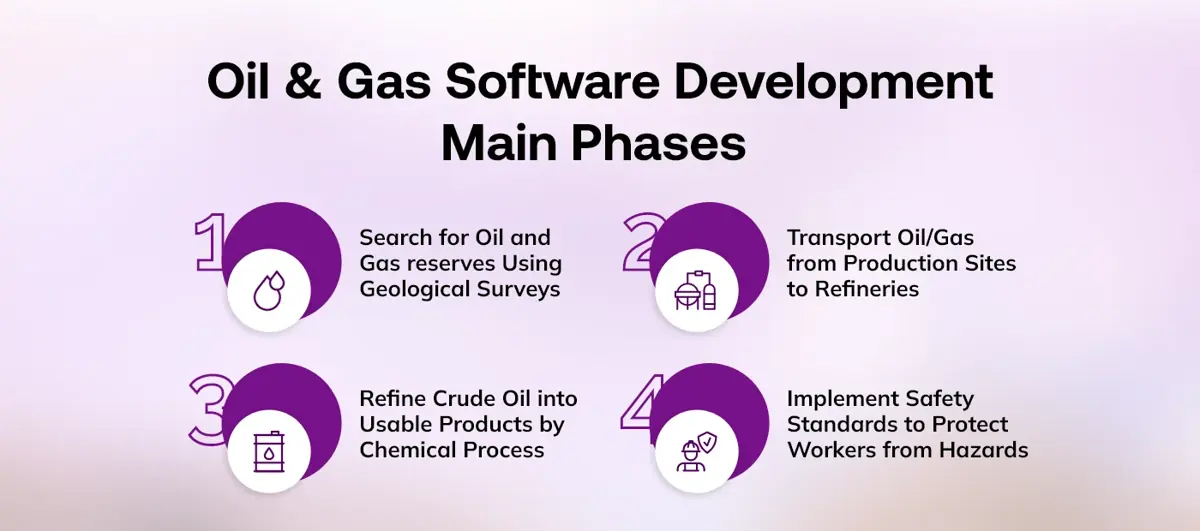
Exploration and Production
- Seismic Data Management: Project that analyzes seismic data to identify potential hydrocarbon reservoirs. This increases the survey success rate.
- Reservoir Simulation: Modeling reservoir behavior with advanced software helps predict operations. It enables you to make better decisions and improve efficiency.
- Drilling Optimization: Packaging optimization software uses real-time data and algorithms to improve accuracy, reduce risk, and reduce costs.
Midstream
- Pipeline Management: Software for managing pipelines, including identifying leaks, maintenance schedules and safety compliance.
- Inventory Management: A system that efficiently tracks and manages inventory of crude oil, products, and other products.
- Transportation Logistics: Projects that improve transportation efficiency, improve performance, and reduce operating costs.
Downstream
- Refining Process Control: The features of software help to control refining process, ensure the premium quality and yield of the product.
- Supply Chain Management: The oil and gas software systems can manage the entire supply chain of the products, right from procurement to distribution.
- Retail Management: Projects managing POS operations, streamlining transactions and providing insights into purchasing behavior for improved business decisions.
Health, Safety, & Sustainability
- Event Management: Incident management software like reporting and prevention, allows companies to increase safety, decrease hazards, and comply with protocols.
- Compliance Management: Compliance software automates reporting and tracking, identifies risks, implements educative actions, and encourages workplace safety.
- Risk Assessment: Risk management tools in oil and gas help identify threats, assess impacts, and develop strategies to ensure safety and efficiency.
Steps to Develop Software for Oil and Gas Industry
Here are the key steps involved in developing software for the oil and gas industry:
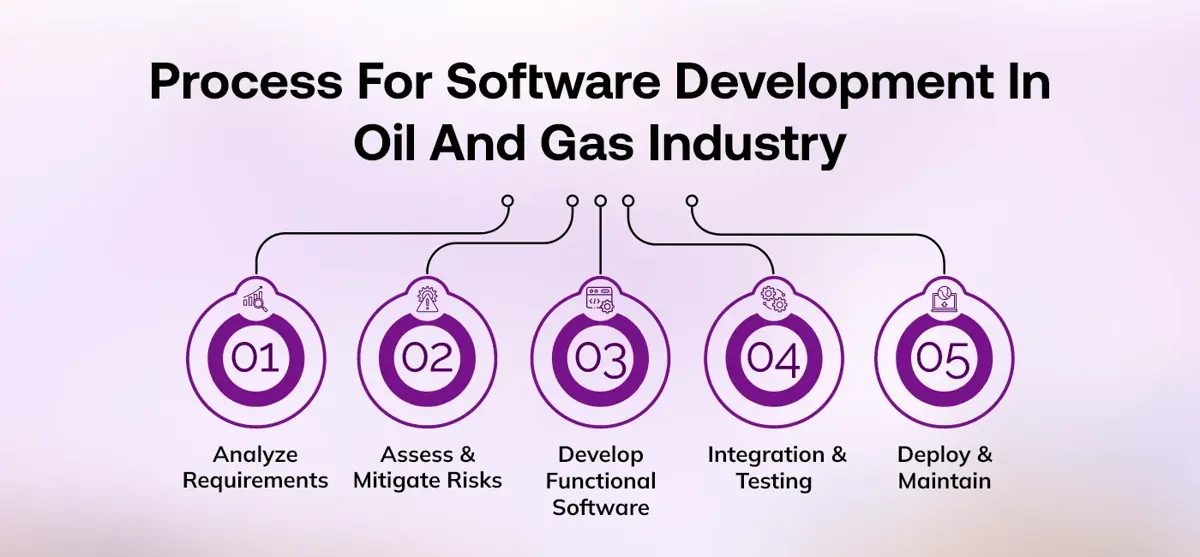
1. Problem Identification & Requirement Gathering
In the oil and gas industry, software development aims to handle challenges including operational efficiency, safety, and cost saving. By engaging stakeholders and development teams can locate important requirements and provide customized solutions that match the needs of the industry.
- Stakeholder Engagement: Involve main stakeholders like engineers, geologists, operations personnel, and IT professionals from the organization.
- Requirements Assessment: Find out particular business problems that the software can address, such as improving efficiency, cutting costs, or boosting safety.
- Necessities Outline: Craft a detailed description that outlines the functionalities of software, performance requirements, and integration needs.
2. Risk Assessment and Mitigation
The oil and gas industry is at high risk of software failure. To decrease these risks, development teams should perform an all-inclusive risk assessment based on security risks, environmental impact and compliance. By identifying and managing potential risks, organizations can increase the reliability and security of their software.
- Safety and Environmental Concerns: Assess potential risks associated with software failures, such as equipment malfunctions or data breaches.
- Regulatory Compliance: Make sure that the software adheres to industry standards and regulations. It includes safety codes and environmental protection laws.
- Mitigation Strategies: Develop plans to address identified risks, such as implementing redundancy, conducting rigorous testing, and providing emergency response procedures.
3 .Design and Development
The process of designing and developing software for oil and gas sector focuses on creating a robust software architecture that works well. It’s about writing more efficient code and increasing productivity. By following the best practices, organizations can design an appealing web3 experience UI/UX design and develop scalable, reliable, and adaptable solutions to meet changing industry needs.
- Architecture Design: Choose the client-server and cloud software architecture depending on the project’s requirements and scalability needs.
- Development Methodology: Work on Agile or Waterfall development methods for better work, select the one that suits the complexity and schedule of your project.
- Coding and Testing: Write clean and high-performing code. After that, perform unit testing to identify and solve issues in the early phase of development.
4. Integration and Testing
It requires careful planning and rigorous testing to integrate updated software with the existing ones in the oil and gas industry. To identify defects and performance issues, only thorough testing can help. The best thing is that it assures the quality of software before deployment.
- Integration Testing: To ensure seamless interoperability, integrate the software with existing systems and infrastructure.
- System Testing: Perform comprehensive testing to determine that the software is meeting the entire requirements. Also, check if is performing well as expected.
- User Acceptance Testing: UAT comprises end-users in testing for validation. It validates that the software meets their needs and expectations.
5. Deployment and Implementation
After development and testing, the software must be deployed and integrated with existing systems. This phase includes training end-users and migrating data from legacy systems. A structured deployment process ensures a smooth transition and minimizes disruptions to operations.
- Installation and Configuration: Deploy the software to production environments and configure it according to definite requirements.
- Data Migration: Transfer important data from old systems to the new software, making sure it is accurate and works well with current processes.
- Training: Educate end-users on how to effectively use the software, tell them about its essential features and the best practices, and most important – give answers to their queries or solve their doubts.
Perks of Software Development in the Oil and Gas Industry
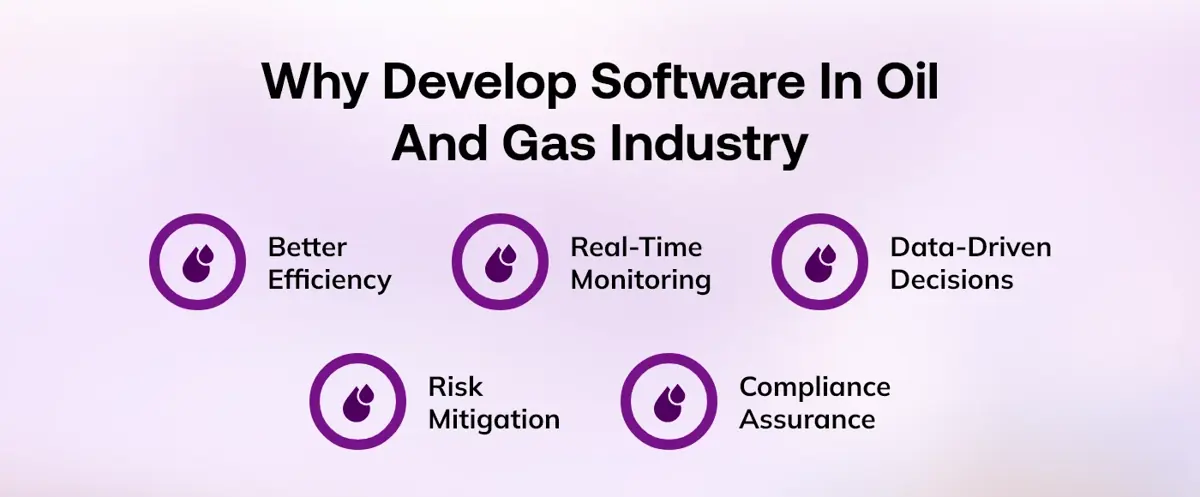
The oil and gas trade has increasingly used software development including open source software in oil and gas to boost operational efficiency and drive innovation. Below, we have listed down the top benefits of developing advanced software for the industry. Have a look:
1. Boosting Productivity in Oil and Gas Industry with Custom Solutions:
Custom software solutions streamline operations in research, manufacturing, and supply chain management. By automating routine tasks, the chances of human errors have greatly been reduced. It increases the production efficiency and decreases the overall operational costs. Furthermore, it provides real-time data insights that help in informed decision-making and optimized resource allocation.
2. Gaining Real-Time Visibility with Remote Monitoring Solutions:
With IoT devices and cloud computing, the software solution allows real-time remote monitoring of equipment and processes. This increases operational control. This allows for timely intervention. Reduce downtime and improve production efficiency. It also supports data-driven decision making and lets companies optimize resources and improve performance.
3. Using Data Analytics for Smart Decision-Making in Oil and Gas:
The software tools assist oil and gas companies in gathering, storing, and analyzing data efficiently. Through Big Data Analytics, they can better manage assets, predict demand, and enhance safety. These tools also aid regulatory compliance and support quick decision-making, helping businesses stay competitive and grow in a changing industry.
4. Mitigating Risks with Custom Software Solutions in Oil and Gas:
Predictive analytics can quickly identify hazards and equipment problems. It allows timely maintenance and risk management to protect employees and environmental security. Real-time monitoring alerts operators to unsafe conditions for faster response. By implementing these measures, companies will promote a culture of safety, reduce accidents, and increase efficiency and reputation.
5. Ensuring Compliance in the Oil and Gas Industry using Custom Solutions:
The oil and gas industry must adhere to strict regulations. Custom software helps companies assess compliance, maintain accurate records, and automatically send compliance reports. It also provides real-time information on regulatory changes, reduces the risk of punishment increases transparency, and improves business performance and reputation.
Summing Up
Oil and gas software development is shaping the future of the industry. More organizations are looking for efficient and reliable software to make their operations smoother, enhance safety, and increase productivity.
As the demand for advanced solutions grows, it’s important to select the right features, follow a clear development plan, and use the latest technology like Inflancer is using!
Hire Developers for Oil and Gas Software – Hire Inflancer
The oil and gas industry is evolving faster than ever—demanding smarter ways to optimize operations, monitor assets, and improve service efficiency. That’s where innovation meets execution. As a trusted software development company in California, USA, Inflancer helps energy leaders transform challenges into opportunities with intelligent digital solutions. From predictive analytics and automated workflows to real-time field visibility, we craft powerful software ecosystems that fuel efficiency, sustainability, and long-term growth for your oil and gas business.
With 18+ years in the market, we have effectively accomplished over 1400 projects across 50+ industries, including oil and gas, logistics, and manufacturing. Our custom software development services will provide you with a solution that meets industry needs, boosts productivity, and lowers costs.
We’ve a dedicated team of 550+ in-house engineers with great skills and we follow the standard practices for oil and gas field service software development. From initial consultation to final deployment and launching of the software, we offer post-launch support and are with you at every small or big step of the process.
Develop Custom Oil and Gas Software with Inflancer
Get the weekly updates on the newest brand stories, business models and technology right in your inbox.