Have you ever felt like your fitness tracker might be holding some health secrets? Spoiler alert: it probably is. Behind the scenes, your wearable devices and Artificial Intelligence (AI) are like silent detectives, gathering a treasure trove of data. It’s not just about creating cool gadgets; it’s the beginning of a health revolution.
Why should you be intrigued?
Beyond the sleek designs and flashy features, these wearables and AI aren’t just upgrading; they’re pioneers in healthcare. Forget just counting steps; imagine a partnership that spots subtle health changes, predicts trends, and hands you the reins to your own health story.
So, why should you be invested? Because this is more than a tech facelift. It’s a significant shift in how we approach health. ai and wearable technology in healthcare aren’t just tools; they’re partners, enhancing your healthcare journey with personalized insights and predictions.
Curious? Keep reading as we uncover the simple collaboration between AI and wearables, peeking into a future where healthcare isn’t just reactive but forward-thinking.
Wearable Health Tech: AI-driven Health Wearables
In healthcare, two important technologies, Artificial Intelligence (AI) and Wearables, are working together to improve how we take care of our health.
AI: The Smart Helper
AI is like a smart helper for computers. It can analyze a lot of information quickly and make smart decisions. In healthcare, AI in healthcare helps by looking at data and finding patterns to give us useful insights about our health.
Wearables: Your Personal Health Tracker
Wearables are devices you can wear, like fitness trackers or smartwatches. They keep track of things like your steps, heart rate, and sleep. It’s like having a personal health tracker with you all the time.
Teamwork: How AI and Wearables Work Together
Now, the interesting part is when AI and Wearables team up. Your wearable collects health data, and AI uses that information to give you personalized advice. For example, if there’s something unusual in your heart rate, AI can let you know. It’s like having a smart friend who looks out for your health.
So, AI and Wearables are a powerful duo, making healthcare more personalized and easier to understand. It’s not just about numbers; it’s about using technology to help us take better care of ourselves. As we get more used to these technologies, the future of healthcare looks promising and straightforward.
The Impact of AI and Wearables in Healthcare
Now that we’ve got the basics down, let’s get into how AI and Wearables are changing the game in healthcare.
Role and Benefits of AI in Healthcare
Think of AI in healthcare as the super-smart sidekick for doctors. It dives deep into tons of health data, helping doctors make faster and more accurate diagnoses. It’s like having an extra set of eyes that catch even the tiniest details.
But AI isn’t just about diagnosis; it’s also about tailoring treatments to individuals. This means better, more effective care with fewer side effects.
Benefits of AI in Healthcare
• Quick Diagnoses: AI helps doctors diagnose illnesses faster.
• Personalized Treatment: It tailors treatments based on your health info.
• Efficient Healthcare: AI makes healthcare work smoother and faster.
• Predicting Issues: AI can warn about potential health problems early on.
Role and Benefits of Wearables in Healthcare
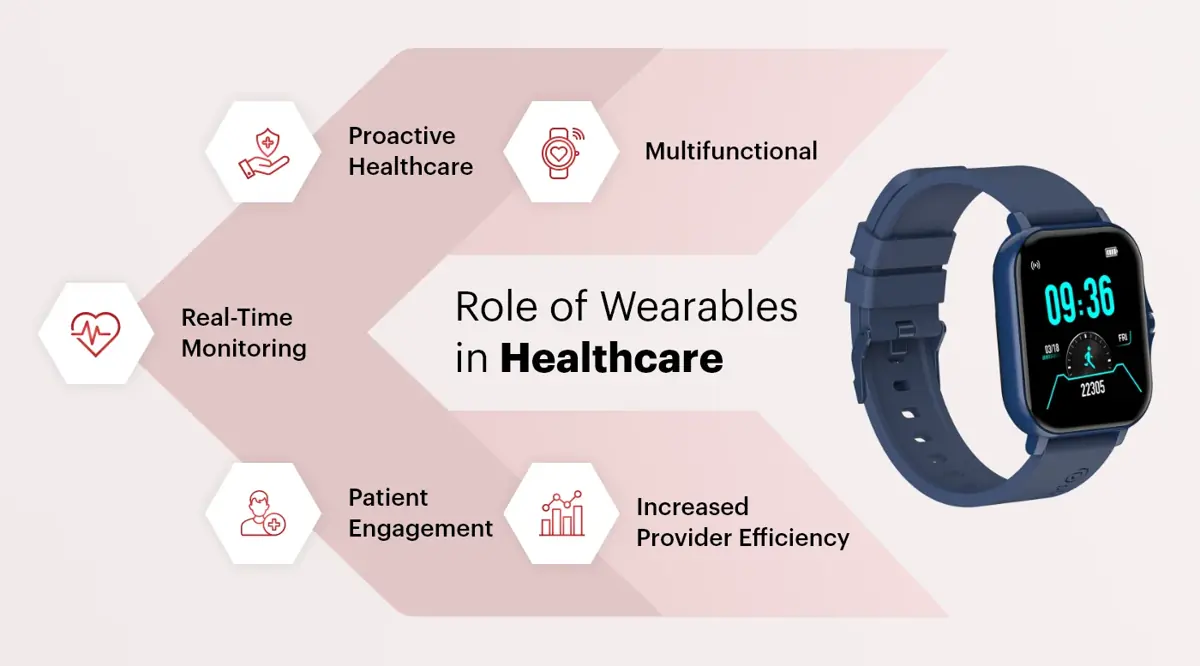
Now, Wearables for patients are like your personal health assistants. They go beyond counting steps, and keeping an eye on your vital signs all the time. This continuous stream of data is like having a health report card that you and your doctor can check anytime.
For example, a fitness tracker not only tells you how much you’ve walked but also keeps track of your heart rate, giving a heads-up on potential issues.
Benefits of Wearables in Healthcare
• Always Monitoring: Wearables keep an eye on your health all the time.
• Spotting Issues Early: They can find potential health problems before they get serious.
• Personalized Advice: Wearables give easy tips based on your health data.
• Making Health Fun: Wearables turn staying healthy into a bit of a game, making it more enjoyable.
Use Cases or Examples
Let’s bring it down to real life. Imagine someone with a chronic condition wearing a device that monitors their health. The data goes straight to their doctor, helping manage their condition without needing frequent hospital visits.
In the AI world, there’s IBM’s Watson Health. It uses AI to sift through loads of medical info, helping doctors stay on top of the latest research for better decision-making.
These are not just fancy ideas, they’re practical ways AI and Wearables are making healthcare better. It’s not just about high-tech stuff; it’s about making health easier to understand and manage. The impact is clear: more personalized care and a healthier future for us all.
Wearable Artificial Intelligence (AI) Market Projections
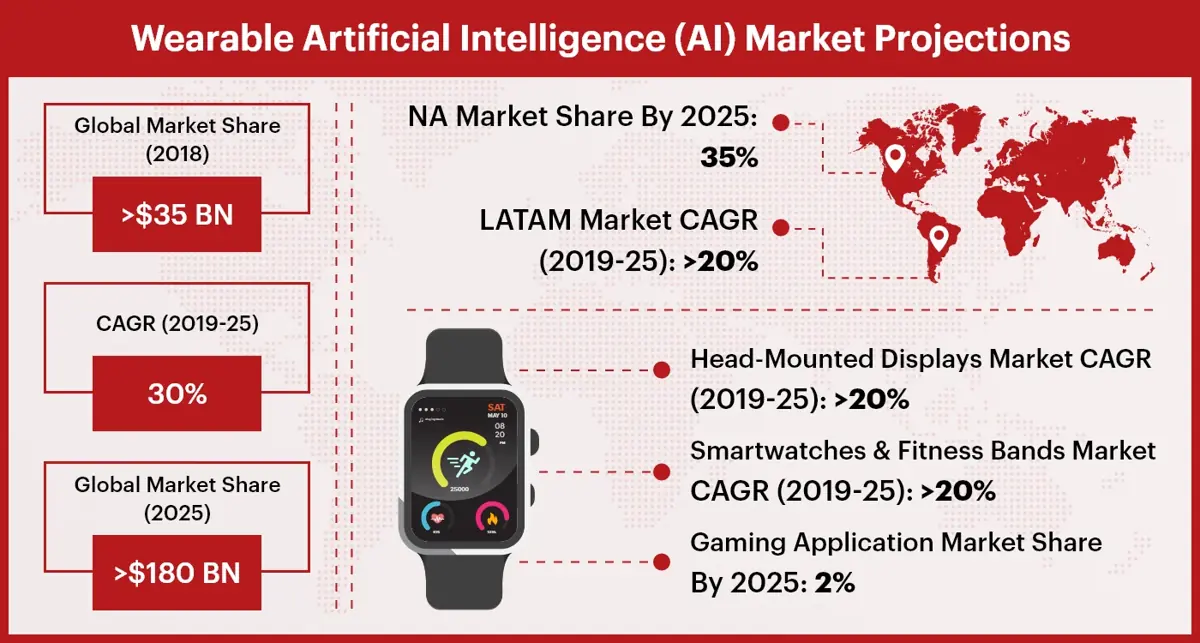
- The global market share for wearable AI is projected to reach $180 billion by 2025.
- North America’s market share in the wearable AI sector is expected to increase by 35%.
- The wearable AI market in Latin America is projected to grow at a Compound Annual Growth Rate (CAGR) of 20% from 2019 to 2025.
Real-World Impact: AI and Wearables in Action
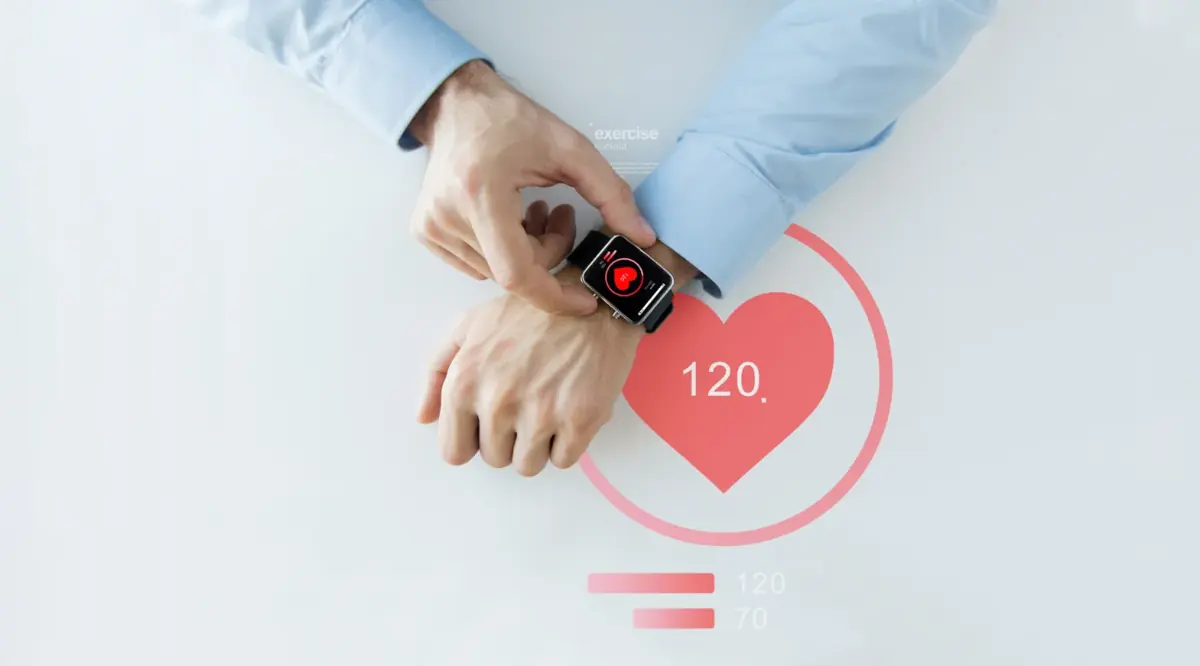
Let’s look at some real examples where big names are using AI and Wearables to make a difference in healthcare.
IBM Watson Health for Chronic Conditions
IBM Watson Health is working with health systems to use wearable devices for managing long-term diseases. These devices collect data all the time, and IBM Watson’s AI studies it to help control these diseases better.
Google Health Predicts Surgery Complications
Google Health uses AI and wearable devices to guess problems after surgery. The data from these devices helps Google Health’s AI to help doctors predict issues and act for better results.
Medtronic’s Personalized Diabetes Care
Medtronic, a big name in medical tech, uses AI and wearable devices for personalized diabetes care. Devices that you can wear keep a check on sugar levels, and Medtronic’s AI gives personal advice, helping people control diabetes better.
Fitbit Monitors Mental Health
Fitbit, famous for its wearable devices, is now also exploring mental health monitoring. Its devices, including smartwatches, track changes in behavior, activity, and sleep patterns. Fitbit’s AI analyzes this data to identify potential signs of mental health concerns, providing early warnings and encouraging timely care. This approach also reflects broader AI technology trends for businesses, where intelligent data analysis is helping organizations develop more proactive, personalized, and user-focused solutions.
Challenges and Concerns: Navigating AI and Wearables in Healthcare
AI and wearables can do a lot of good in healthcare app development, but there are some issues we need to sort out.
Data Privacy and Security Concerns
Wearables collect a lot of health data and AI uses this data. This can make people worry about their private information. We need to make sure this data is safe and that only the right people can access it.
Rules and Regulations
Healthcare has a lot of rules to keep patients safe. But these rules might not cover everything when it comes to AI and wearables. Tech developers, healthcare providers, and the people who make the rules need to work together to make sure everything is okay.
Tech Issues
There can be problems when you try to put AI into wearables. For example, we need to make sure the health data from the wearables is correct. Things like sensor accuracy and standard protocols need to be checked all the time.
Interoperability and Integration
Healthcare uses a lot of different devices and systems. It can be hard to get all these things to work together. This is important because it lets doctors see all the health data they need.
User Acceptance and Trust
People need to trust AI and wearables before they will use them. They need to know that the tech is accurate, reliable, and used in the right way. We also need to think about who owns the data, how clear the algorithms are, and how this tech might change the relationship between patients and doctors.
To address these challenges, collaboration across the healthcare ecosystem is essential. With clear regulations, robust data security, and well-defined ethical guidelines, professionals can safely adopt innovations inspired by platforms like the Docquity platform. This balanced approach enables the effective use of AI and wearable technologies in healthcare while minimizing risks and building long-term trust.
What’s Next: AI and Wearables in Healthcare
Here’s what we might see in the future with AI and wearable devices in healthcare:
1. AI in Wearable Design
Wearable devices might get smarter. They could have built-in AI that gives real-time advice based on the data they collect.
2. AI for Preventive Care
Use of AI in healthcare could help us stop health problems before they start. It could use data from wearable devices to predict health issues and make plans to prevent them.
3. Better Mental Health Monitoring
Wearable devices could get better at checking mental health. They might be able to spot stress, sleep problems, and more, which could help people get help sooner.
4. Improved Remote Patient Monitoring
AI could make it easier to keep an eye on patients from far away. It could analyze data from wearable devices and send alerts automatically. This could be helpful for people with long-term health conditions.
5. AI and Drug Discovery
AI and wearable devices could work together to find new medicines faster. Wearable devices could collect real-time data from people in medical studies, and AI could use this data to find new treatments.
Also, Read: How Hospital Management Software Is Transforming The Healthcare Industry?
What Might Happen in the Future
1. Wearable Implants and Nanotechnology
We might see wearable implants and tiny tech devices that can check health at a very small level.
2. AI-Generated Personalized Treatment Plans
AI could make very personal treatment plans based on a person’s genes, lifestyle, and health data from wearable devices.
3. Wearables and Augmented Reality (AR)
Wearable devices could work with AR to give healthcare professionals real-time data during procedures or check-ups. This could help them make better decisions.
The future of AI and wearable devices in healthcare looks exciting. Healthcare software development companies, like Inflancer, are skilled at seamlessly integrating AI and wearable app technology, paving the way for a revolution in healthcare. These trends mentioned above can also make healthcare more personal, proactive, and efficient.

Outcome
AI and wearable technology are transforming the future of healthcare, creating smarter, more connected systems that improve patient care and outcomes. These innovations enable continuous health monitoring, empower doctors to take proactive action before conditions worsen, and make medical experiences more personalized and patient-focused.
With tools like an AI Medical Scribe, healthcare providers can reduce administrative burdens and spend more time on what truly matters—delivering compassionate care. However, this digital transformation must also prioritize data privacy, transparency, and compliance with regulations. Building trust and collaboration across all stakeholders will be key.
Together, AI and wearable tech have the potential to make healthcare more efficient, human-centered, and focused on long-term wellness.
Explore the synergy of AI and Wearables shaping the future of digital health. Ready for a health upgrade?
Get the weekly updates on the newest brand stories, business models and technology right in your inbox.