Give your healthcare services a tech makeover.
Healthcare is a big responsibility, which soon becomes chaos internally when the information slips through the cracks when communication gaps take over and data sharing sinks down. In this critically challenging healthcare ecosystem, healthcare service providers, hospitals and clinical professionals go to the edges to keep the operations seamless and swift.
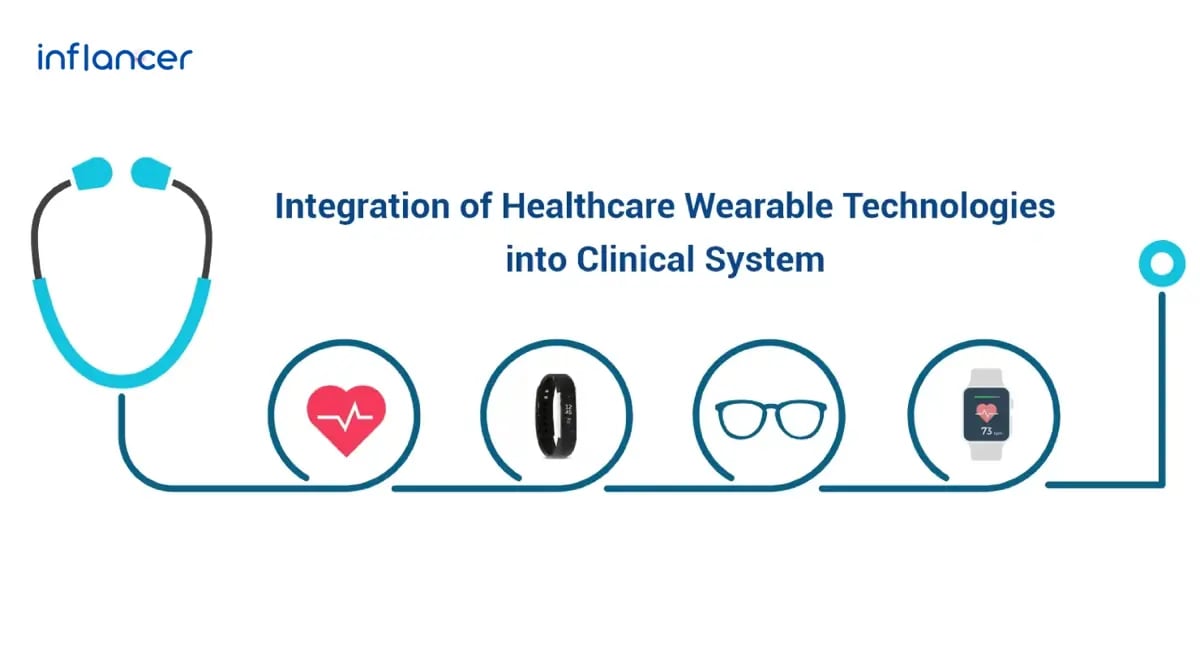
The disruption in healthcare technologies promises to revolutionize the way information passes between connected networks. Concentrating on wearable devices and/or healthcare wearable technologies which are commonly available as fitness trackers, insulin pumps, cardiovascular defibrillators, and vital signs monitors HWTs have the added advantage of tracking and monitoring physical activities (PA) and vital signs, which are related to medical and fitness and wellness. Some of these measurable parameters are heart rate, blood pressure, pulse rate, muscle activity, glucose level, sleeping pattern, electrocardiogram (ECG), core temperature, oxygen saturation, stress levels, and monitoring of eating habits.
Technology advancements in the healthcare sector have made it possible to integrate these medical devices with clinical software/ EMR/EHR, and this is where Inflancer stands with you.
Future potential
“Market for wearable devices expected to be worth $265.4 billion by 2026”
Integrating Health and fitness data with EMR or simply transferring the patient’s health data to Doctors’ clinical software would help:
- Better monitor patients remotely
- Improve and organize the amount of data physicians receive
- Expand the reach of patient care to rural areas
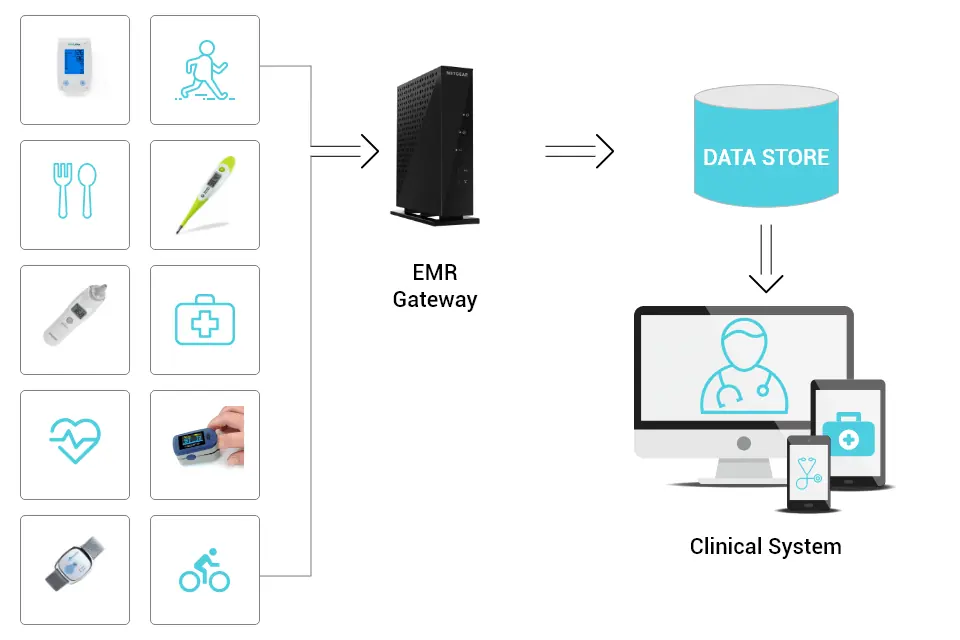
Usage model of EMR Gateway solution
An EMR Gateway provides a framework to connect wearable devices through USB, Bluetooth, serial ports and establish a communication conduit with each device, and start collecting data through it. The data collected in the Data Store gets converted and comes in the form of HL7 format. The data stored here can be referred to any database in the Healthcare enterprise or public storage like Microsoft Health vault.
Next, the clinical system interacts with data store and interprets the data to provide various health forecasting by functionalities like report analysis, charting, healthcare trends, etc. subsequently, helping physicians to provide an optimal and healthy solution to the patients.
Wearable Technology in Numbers
The growth of wearable technology during the past 5 years has been remarkably fast.
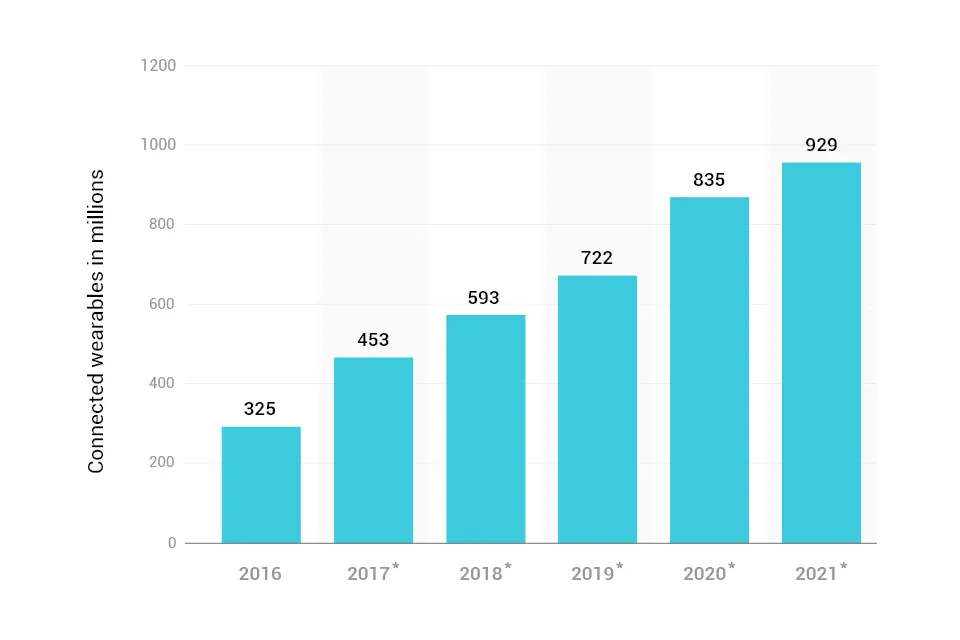
By 2016 the number of connected wearables was already 325 million, and Figure 1 shows how the amount of connected wearable devices is estimated to grow during the next 4 years (Statista, 2017). Pretty evidence of how remarkably fast the market for iot development is currently growing.
Read more: 5G and Telemedicine: How Will it Shape Healthcare
Features of Healthcare Wearable Technology
- I/O communication over Wi-Fi, Bluetooth, USB, FTP, Modem and Serial port based protocols
- Automatic device detection, connection and data acquisition without user intervention
- Clinical Application interface using Socket, FTP, ActiveX and web services
- Flexible clinical systems connectivity with system-specific data management interface library
- Data format support includes IHE/HL7 v2.x, CCR and Proprietary binary/text
- Support for Continua X73 Agent-Manager protocol
- Support for device enabled events. (Eg: When alert messages sent from the device, low battery, alarm etc).
How Can Wearable technology be seamlessly integrated into Electronic Medical Records?
Inflancer’s EMR Gateway solution connects wearable devices, allowing seamless data collection and transmission to clinical software. This integration enhances remote patient monitoring, organizes data for physicians, and expands healthcare accessibility to rural areas, aligning with the projected $265.4 billion wearable devices market by 2026.
Final Thought
HWTs have several benefits in tracking and monitoring fitness and medical daily activities independently. Gathering these functions in a single device and integrating the collected data into the EMR, will have a huge potential in promoting the meaningful use of EMR. This integration will provide a long-term view of a patient’s overall health, filling in data gaps to enable evidence-based care. Overall, smart HWTs will increase both patient engagement and preventive care, and that ultimately will save time and money.
Want to Integrate Wearable Technology into your Clinical System?
Get the weekly updates on the newest brand stories, business models and technology right in your inbox.