Have you ever noticed how other businesses perform really well in the online market while other businesses struggle to do so? Well, one of the prominent reasons behind it is the technologies stack. You can think of the tech stack as a special recipe for success which is a mix of tools and technologies that can boost your business performance online.
But what exactly is a tech stack?
Apart from being more than just a bunch of code and software, the tech stack is basically the backbone of digital presence. From the user experience of your website to how efficiently your business runs in the market, it affects everything. Therefore, choosing the right tech stack is not just about following the trend rather, it’s about creating a competitive edge that makes your business stand out in the market.
Keep reading because in this blog you’ll learn about some of the best tech stack recommendations for different industries. Say e-commerce, healthcare, or finance doesn’t matter which industry you are in, the insights from this blog will help you take your business to the next level. Curious to find the right tools and learn more to push your business forward? Keep reading!
Picking The Right Tech Tools – Not All Apps Need The Same Toolbox!
Choosing the right tech stack isn’t one-size-fits-all. Just like chefs use different tools for baking cakes or searing steaks, your tech choices should fit your specific needs.
Imagine you’re building a social media platform. You’d need to handle lots of user data and ensure quick, real-time communication. So, you’d choose a database and development tools that handle these tasks well.
Now, consider a fitness app. Here, the focus might be on making the app easy to use and connecting with wearable devices like fitness trackers. You’d pick front-end tools that create a smooth experience for users and might include technologies like IoT that link to these devices.
By tailoring your tech stack to what your industry needs, you make sure your product works well for users. Understanding what your users want and the challenges of your field helps you choose the right technologies. This way, technology supports your goals and helps your product stand out.
What Having A Right Tech Stack Is Important?
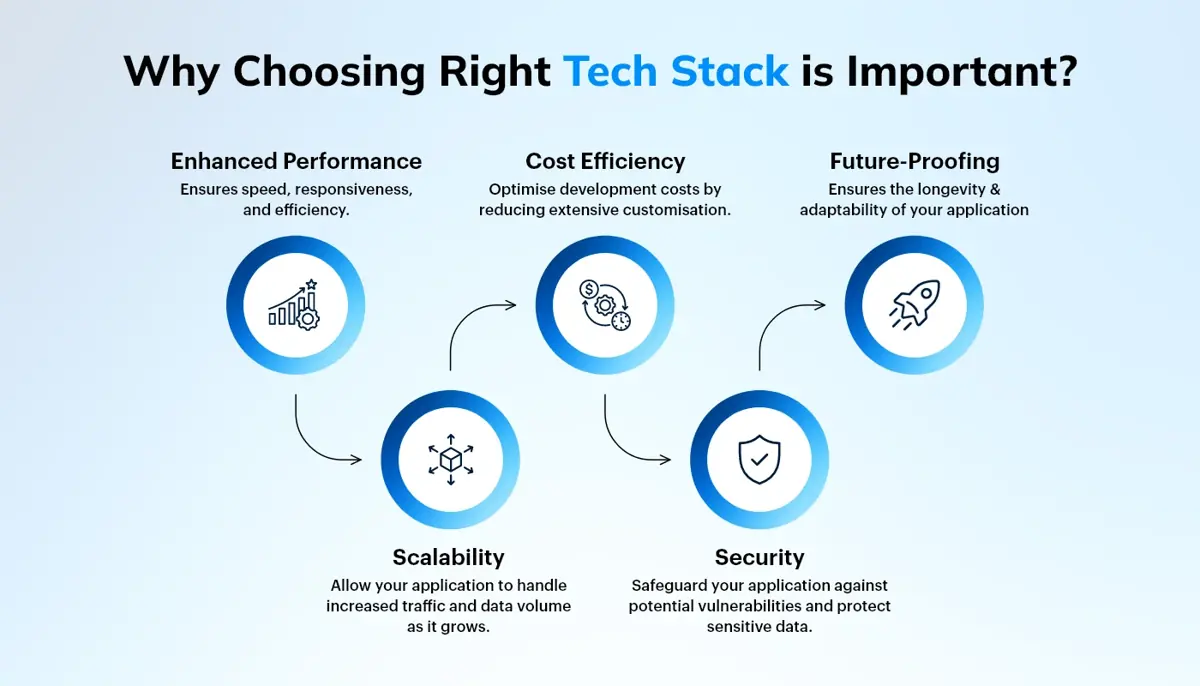
Here are some reasons that shows why having a right tech stack is important for a business:
Efficiency and Productivity: It helps in automating the task along with smooth workflow, which lets teams to focus on important tasks instead of dealing with out of the date tools.
Scalability and Growth: When your user base increases or when you expand your services, a good tech stack prevents the need to completely rebuild your existing system because a good tech stack has the ability to grow on its own as your business grows.
Security and Reliability: A good tech stack always keeps your data safe from cyber threats and it ensures that your systems run smoothly without any interruption.
Cost-Effectiveness: A right kind of tech stack may need bit of an extra investment in the beginning but it saves money in the long run. It helps developers to work fast & helps reduce maintenance cost.
Competitive Benefit: It’s important to adapt to the changes and trends in today’s fast-paced and evolving digital world. Having a good tech stack helps you move quickly and stay ahead of your competitors.
Choosing the right tech stack is not just about building a great product, rather it’s about setting up your business for long-term success and leadership in your industry.
Which Is The Best Tech For Your Industry?
| Industry | Focus Areas | Technology Stack Options |
|---|---|---|
| Healthcare & Lifesciences | EHR, HMS, Telehealth, Medical Imaging, Drug Discovery | Backend: Java (Spring Boot), Python (Django), Ruby on Rails Database: PostgreSQL, HBase (for big data) Frontend: ReactJS, AngularJS, Vue.js Security: OAuth, OpenID Connect, HIPAA-compliant Cloud Providers (AWS, Azure, GCP) |
| E-Commerce Solutions | Regulatory compliance, security | E-commerce Platforms: Shopify Plus, BigCommerce Enterprise (HIPAA compliant options available) Payment Processing: Stripe, Braintree Security: SSL encryption, HIPAA-compliant measures |
| Transport & Logistics | Route optimization, real-time tracking | Backend: Java (Spring Boot), Python (Django), GoLang Database: PostgreSQL, MongoDB Mobile Development: React Native, Kotlin Real-time Tracking: Firebase Realtime Database, Socket.IO |
| Social Networking | Scalability, real-time communication | Backend: Node.js (Express.js), Python (Flask) Database: MongoDB Frontend: ReactJS, Vue.js Real-time Communication: WebRTC, Pusher |
| Real Estate | User interface, location-based services | Backend: Python (Django), Ruby on Rails Database: PostgreSQL, MySQL Frontend: ReactJS, AngularJS Mapping & Location Services: Google Maps Platform, Mapbox |
| Education & eLearning | Content delivery, personalized learning | Backend: Python (Django), Java (Spring Boot) Database: PostgreSQL, MongoDB Frontend: ReactJS, AngularJS CMS: Moodle, Canvas, Blackboard Learn Ultra Video Streaming: Amazon S3, Vimeo |
| Banking, Finance & Insurance | Security, regulatory compliance | Backend: Java (Spring Boot), C# (.NET) Database: Oracle Database, PostgreSQL Frontend: AngularJS Security: Multi-factor authentication, blockchain Big Data Analytics: Apache Hadoop, Spark |
| Travel & Hospitality | Mobile responsiveness, booking management | Backend: Python (Django), Node.js (Express.js) Database: PostgreSQL, MongoDB Frontend: React Native, Flutter API Integrations: Stripe, PayPal, Booking.com API |
| Enterprise Retail & Manufacturing | Inventory management, supply chain | Backend: Java (Spring Boot), Python (Django) Database: PostgreSQL, MongoDB IoT Integration: Sensors, devices Cloud Computing: AWS, Azure, GCP Machine Learning: TensorFlow, PyTorch |
| Media & Entertainment | Content delivery, scalability | Backend: Node.js (Express.js), GoLang Database: MongoDB CDN: Amazon CloudFront, Azure CDN, Google Cloud CDN Video Streaming: Amazon Prime Video Channels, Vimeo CMS: Headless CMS (Contentful, Prismic) |
| On-Demand Delivery | Real-time tracking, route optimization | Backend: Python (Django), Node.js (Express.js) Database: PostgreSQL, MongoDB Mobile Development: React Native, Flutter Mapping & Location Services: Google Maps Platform, HERE Maps API |
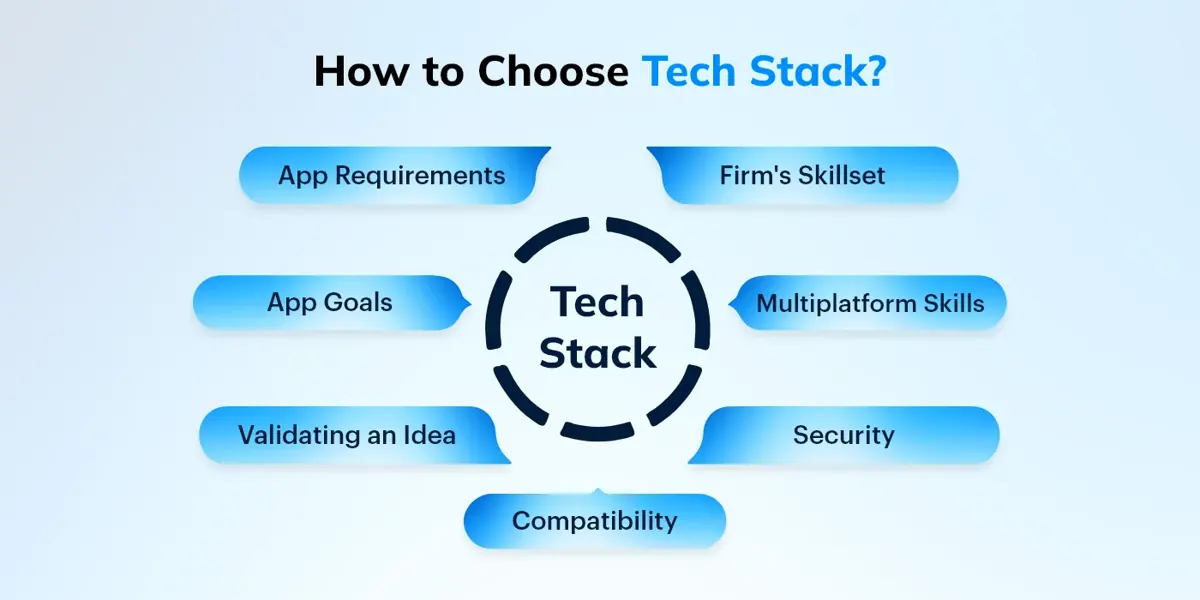
5 Factors To Consider When Selecting A Technology Stack
Project Requirements And Functionality
Choosing your technology stack should start with understanding your project’s specific needs. Consider what type of application you’re building—whether it’s a web app, mobile app, or complex enterprise system.
Identify critical features like real-time data processing, user authentication, or advanced data visualization that can enhance user experience.
Also, think about scalability: Will your user base grow quickly, or will your data expand significantly? Select technologies that can handle these future demands effectively.
Team Expertise And Learning Curve
When picking the tools for your project, think about your development team’s skills and experience. This can speed things up and save money by avoiding lots of training or hiring new people.
But if you need to use new technologies, make sure you plan for the time it takes to learn it. Also, check if there’s a big community around the tools you’re considering.
A strong community means there are lots of tutorials, forums, and people who can help if you get stuck. This way, you’ll have the support you need to make your project successful.
Project Budget And Maintenance Costs
Tech stacks can vary significantly in cost. Here’s what to consider:
Licensing fees: Some technologies require commercial licenses, while others are open-source and free to use.
Cloud infrastructure: Cloud-based solutions offer flexibility and scalability, but ongoing costs can accumulate. Evaluate your budget for cloud services like AWS, Azure, or GCP.
Long-term maintenance: Pick technologies that are easy to maintain in the long run. Check if there are enough developers who know the stack well and if updates and bug fixes are easy to find.
Security And Compliance Requirements
Making sure your application is very secure is really important to protect sensitive information and keep users’ trust. Here’s how to do it: Use strong security methods like powerful encryption for data storage and transmission.
Make sure only authorized users can access the app with strict login processes and controls. Follow rules like HIPAA or GDPR if you deal with sensitive data. Keep your system updated with the latest security fixes to stay ahead of new threats. By focusing on these steps, you can keep user data safe and your app secure.
Future-proofing And Innovation
In the fast-changing world of technology, achieving long-term success boils down to a few key things. First, balancing new and reliable technologies is crucial because the newest ones might not always be stable or well-supported.
Second, your tech setup should grow as your needs do, staying flexible and scalable. Lastly, it’s important to pick tools that work well with others so you can easily add new features when needed, while also understanding the advantages of full stack development for building adaptable and efficient solutions. By focusing on these points, businesses can set themselves up for success in today’s digital world.
Top Tech Stack Recommendations: Building Your Foundation
Now that we’ve seen why choosing the right tech tools is crucial, let’s look at some top recommendations for different aspects. Remember, the best choices depend on your project and industry, but these ideas will help you get started.
Front-End Technologies
The front-end, where users interact directly, is crucial for your application’s visual and interactive experience. Here are top choices in this area:
ReactJS:
ReactJS is well-known for organizing web interfaces into reusable parts and efficiently updating what users see, which is great for creating interactive and dynamic websites.
Pros: Efficient, scalable, backed by a vast developer community.
Cons: Can be complex to learn initially, and there’s a risk of over-complicating projects.
Vue.js:
Vue.js is a popular JavaScript framework known for its flexibility and ease of use. It’s praised for its progressive nature, allowing developers to start small and add features as needed over time.
Pros: Versatile, beginner-friendly, and well-documented.
Cons: Has a smaller developer community compared to React.
Angular:
Angular, developed by Google, is a comprehensive framework offering a structured approach with built-in features like dependency injection and routing.
Pros: Robust, secure, and well-suited for large enterprise applications.
Cons: Its more rigid structure may be less flexible for smaller projects.
These are just a few examples, and other options like Svelte or frameworks built specifically for mobile app development (React Native, Flutter) might be better suited for specific needs.
Back-End Technologies
The back-end of your application handles all the behind-the-scenes work like managing how the server operates, connecting to databases, and making sure everything your app does runs smoothly. Here are some popular choices for building that part of your app:
Python (with Django):
Python, when used with Django framework, is a game-changer for businesses seeking fast, secure, and scalable web solutions. Its clean syntax and vast ecosystem allow teams to build feature-rich applications in record time. Skilled Django developers use this combination to craft high-performing websites that drive engagement, boost efficiency, and grow with your business.
Pros: Versatile, developer-friendly, large community support.
Cons: It may not perform well for applications that need a lot of resources.
Node.js (with Express):
Node.js is good for building apps that need to handle many tasks happening simultaneously, like updates that happen in real-time. If you’re building a fast, scalable web application, Express.js is one of the most efficient frameworks to streamline backend development. It simplifies how your app handles routes, middleware, and server logic, allowing developers to focus on creating seamless user experiences. For businesses aiming to build powerful, high-performing applications, it’s a smart move to hire Node.js developers who can expertly leverage Express to bring your project to life with speed, flexibility, and reliability.
Pros: Fast, efficient for real-time apps, large JavaScript developer pool.
Cons: May require more development effort for complex data structures.
Read: Cost To Hire NodeJS Developer
Java (with Spring):
Java, a mature and strong programming language, combined with the Spring framework, offers a stable and secure base for building enterprise-level applications.
Pros: Secure, scalable, vast ecosystem of libraries and tools.
Cons: Java can sometimes require writing more code compared to other languages that might be simpler and more concise.
These options are just the beginning when it comes to backend development. PHP with Laravel, C#, and serverless technologies like AWS Lambda all have their own strengths and weaknesses. They each offer different benefits to the expert Laravel developer depending on what you need, whether it’s quickly building prototypes, handling large-scale projects, or using cost-effective serverless setups.
Database Technologies
The database is like a secure storage space for all your app’s data—like user info, product details, and how your app runs. Picking the right one depends on how much data you have and what it’s used for. Here are some top options:
Relational Databases (SQL):
Databases like MySQL, PostgreSQL, or Microsoft SQL Server are good at organizing data neatly into tables that are connected in specific ways.
Pros: Mature technology, strong data integrity, well-suited for complex queries.
Cons: These databases might struggle with very large datasets and could need complicated setup for unusual types of data.
NoSQL Databases:
For data that doesn’t fit neatly into tables or grows quickly, NoSQL databases such as MongoDB or Cassandra provide flexibility and can scale horizontally.
Pros: Highly scalable, ideal for big data and real-time applications.
Cons: May lack the rigid structure and data integrity of relational databases, can require specialized querying languages.
Cloud-Based Databases:
Cloud Services like Google Cloud SQL or Amazon DynamoDB offer a convenient, managed solution for your database needs.
Pros: Scalable, on-demand resources, reduced administrative burden.
Cons: You might be tied to one company, and costs can go up if you have a lot of data.
Devops Technologies
DevOps tools connect developers, operations, and security teams, making software development smoother and more efficient. Here are some important ones:
Version Control Systems (VCS):
Tools such as Git and Subversion enable teams to track code changes, collaborate efficiently, and roll back to earlier versions when necessary.
Pros: Improved collaboration, facilitates code reviews, efficient version control.
Cons: Requires developer familiarity with VCS concepts.
Continuous Integration/Continuous Delivery (CI/CD):
Tools like Jenkins or CircleCI automate the building, testing, and deployment of code, speeding up development cycles and minimizing mistakes.
Pros: Simplified deployment, quicker feedback, fewer human errors.
Cons: Requires initial setup and configuration, may have a learning curve for some team members.
Containerization Technologies:
Tools like Docker create standardized software packages known as containers, which can be deployed easily across various environments.
Pros: Increased portability, consistent deployments, simplifies infrastructure management.
Cons: Using containers for complex setups often needs extra tools to manage everything smoothly, which can make things more complicated.
By using these DevOps practices and tools, you can greatly improve the efficiency and reliability of your software development process.
Conclusion
Either you go with vue.js developer or any other stack developer, choosing the right tech stack is like laying a strong foundation for your house. It affects everything from how your project works to its long-term success. While the options we looked at are a good starting point, remember there’s no one-size-fits-all solution.
In today’s fast-evolving digital world, your tech stack isn’t just a foundation, it’s your competitive edge, especially when you hire full-stack developers who can choose the right technologies to elevate your product’s performance, security, and scalability, turning your ideas into impactful results.
If you’re seeking software development services in San Francisco, Inflancer is your trusted partner in driving innovation and digital transformation. Our expert team doesn’t just code, we strategize for your success. With the right technology choices and a future-focused approach, Inflancer helps you accelerate growth, enhance efficiency, and create a powerful digital experience that sets your brand apart.
Not Sure Where to Start From? Don't Worry! Let Inflancer Make It Easy.
Frequently Asked Questions
Get the weekly updates on the newest brand stories, business models and technology right in your inbox.