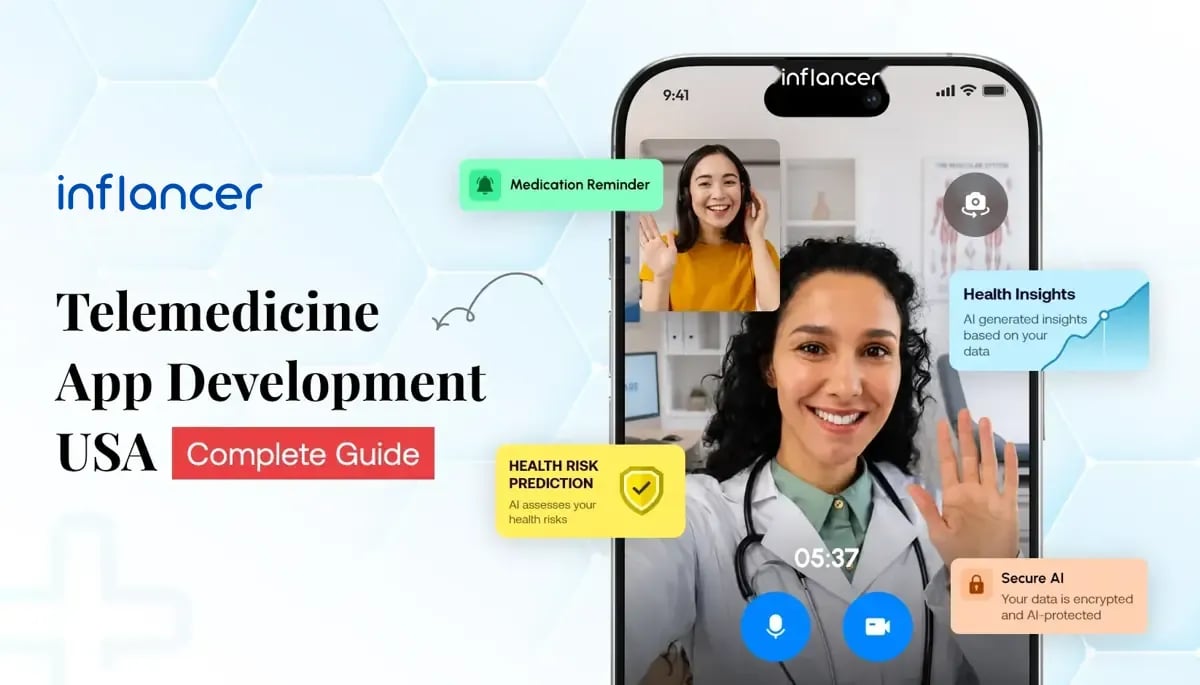
As the pandemic signaled the need for urgent care, telehealth solutions became the lifeblood for every healthcare provider, telemedicine app, and hospital organization.
Telehealth and telemedicine app solutions are meeting thousands of urgent patient care needs daily across the world.
But just as telemedicine apps came to the rescue to provide urgent care and remote patient monitoring needs more than ever, telehealth optimization is equally important to ensure that you make your technology work to overcome all the challenges.
To improve patient experience and make your healthcare organization resilient not only to respond to COVID-19 cases but to adapt a continued dynamic environment, it is necessary to fine-tune the telehealth technology.
We ask healthcare providers leveraging the benefits of telehealth- “Are you making the most of the tech investment you’ve made in telemedicine app development? “
Here, we’ve highlighted all the possible use cases a telehealth technology has to offer beyond meeting the acute care needs and pandemic screenings. In addition, you can also spot the best practices to optimize telehealth technology from the excerpts of top technology experts.
Develop a Solution Scalable Across Your Clinical Workflows and Use Cases
Now more than ever, patients are relying on digital for healthcare. They are approaching telemedicine apps to not only address their urgent care needs but also to meet chronic care, less-threatening ailments and surgical follow-up needs.
A scalable telehealth solution serves healthcare providers beyond the urgent care or acute care needs of patients.
Acknowledging this massive shift and patient preferences, healthcare organizations must develop a solution that is scalable across their entire use cases and clinical workflows.
From scheduling on-demand patient appointments to hospital admissions, filing medical reports to insurance forms, registering new patients to electronic prescriptions and maintaining their electronic health records and every other use case that blankets your clinical workflows should be optimized in your technology solution.
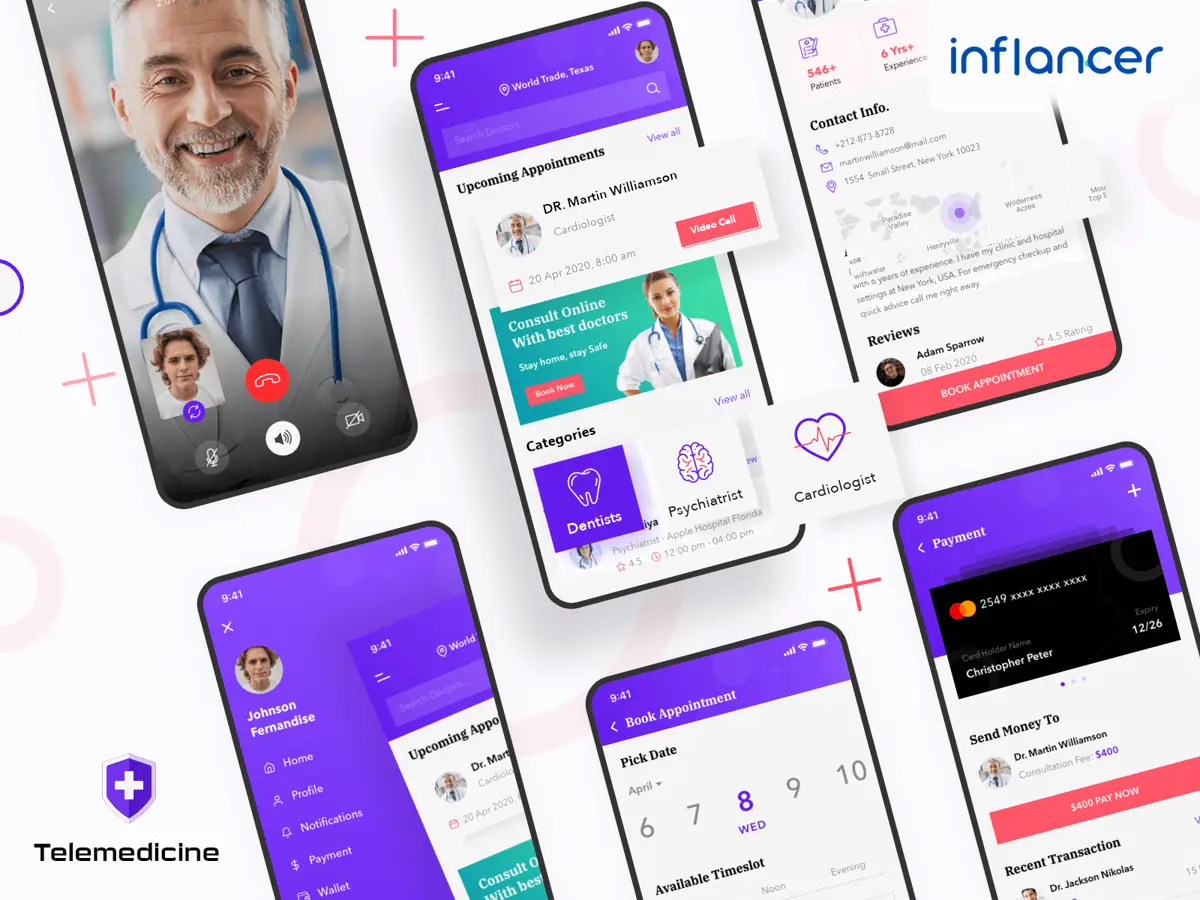
Create an Adaptable Solution Optimized For Changing Needs of Patients and Provider
Do not define the dimensions of your telemedicine solution, if you’re looking to improve the overall patient experience.
Make it heroic for handling different scenarios.
As value-based care increases, CIOs are developing different delivery models of telemedicine solution that adapts to the needs of patients and care providers.
Like for instance, you have a telemedicine solution viz. “Telesurgery”; where your surgeons use robots to operate remotely. Though it’s innovative, but not everyone can be operated by a robot today. You have to expand its use cases to make the most out of it.
Like your surgical department can take it further for pre-op and post-op patients.
For pre-op patients, it can be used to convey the set of instructions to be taken into consideration before the operation.
Similarly, for post-op patients,’ telemedicine’s remote patient monitoring and automated follow-up feature can be a convenient and cost-effective way to give them clinical treatment out of the walls as well as guide them the best practices to recover faster.
This adaptable feature will help in reducing in-person visits and hospital readmissions (helping providers) without having the patient leave home (meeting a patient’s comfort).
Make Sure Your Technology Integrates Seamlessly With Your Existing System
To deliver a seamless patient experience, CIOs should ensure the telehealth system becomes an integral part of their organization.
How would you make it possible?
When implementing a telemedicine solution, make sure you ask your technology partner to integrate the telehealth technology with existing systems like EHR.
This integration will open the window for a connected environment across all the touchpoints of patients and working personnel including doctors, surgeons, nurses and clinicians. Thus, creating a better patient and provider experience.
This integration comes with benefits like timely knowledge transfer, making shared informed and well-timed healthcare decisions and transparent processes across the healthcare continuum.
Virtual Observation
As the COVID-19 pandemic has severely tested the health system capacity, telehealth has proven to be a key pillar in technology innovation. Wherein, virtual care and remote patient monitoring have seen the biggest stage of online consultation.
Thereby, helping clinical staff limit the use of PPE and getting exposed to the virus.
Virtual observation allows hospitals and health systems to free up their clinical staff and streamline efficiency.
In this, they deploy a video camera to the patient’s bed or hard mount it to the cart and appoint a non-clinical trained staff for in-room monitoring also known as in-room sitters. In the event where patient’s behavior warrants an intervention of the care provider, the in-room sitter alerts the specialist to provide immediate virtual care. The instructions are then performed by the in-room assistant.

Conclusion
The COVID pandemic has spurred the use of telemedicine applications and RPM tools. This technology has become the first line of defense for every primary care and specialty physician.
Condition is this, around 76 percent of U.S. hospitals are connecting with patients remotely using video, audio, chat, email and other technologies, according to the Arizton report.
This practice of remote patient monitoring is no more constrained to tackle only the pandemic. Patients are more likely to turn to telehealth after the pandemic. Hence, accelerating the widespread telehealth adoption.
Hospitals, health systems and group practices have to invest quickly in scaling their telemedicine and remote monitoring systems.
Ready to turn your digital dreams into reality?
Get the weekly updates on the newest brand stories, business models and technology right in your inbox.