
Handling data nowadays can be challenging and with the constant flow of information from clicks, purchases, and online interactions this has become even more difficult.
This is where DataOps steps in, providing a solution for businesses to effectively manage and make sense of the abundance of data.
DataOps, short for data operations, is a methodology that brings together DevOps teams with data engineer and data scientist roles to provide the tools, processes, and organizational structures to enable the rapid, automated, and secure management of data. Its goal is to improve the speed, quality, and reliability of data analytics.
Now, you might wonder, why is managing data so crucial. Well, think of it like trying to find your way through a maze while wearing a blindfold. Without good data management, businesses are like they’re making decisions without seeing the whole picture. DataOps helps businesses see clearly, so they can make smart decisions based on accurate information. This can lead to:
- Better experiences for customers
- More efficiency and getting things done faster
- Coming up with new ideas and staying ahead of the competition
Keep reading to explore the world of DataOps and explore how it can revolutionize your data management.
What Is DataOps and How Does it Impact Data Management?
DataOps stands for “Data Operations.” It’s a teamwork approach to handling data that takes ideas from agile methods, DevOps, and lean manufacturing. The goal is to connect data teams with stakeholders, making teamwork smoother and simplifying the journey of data from getting it to using and analysing it.
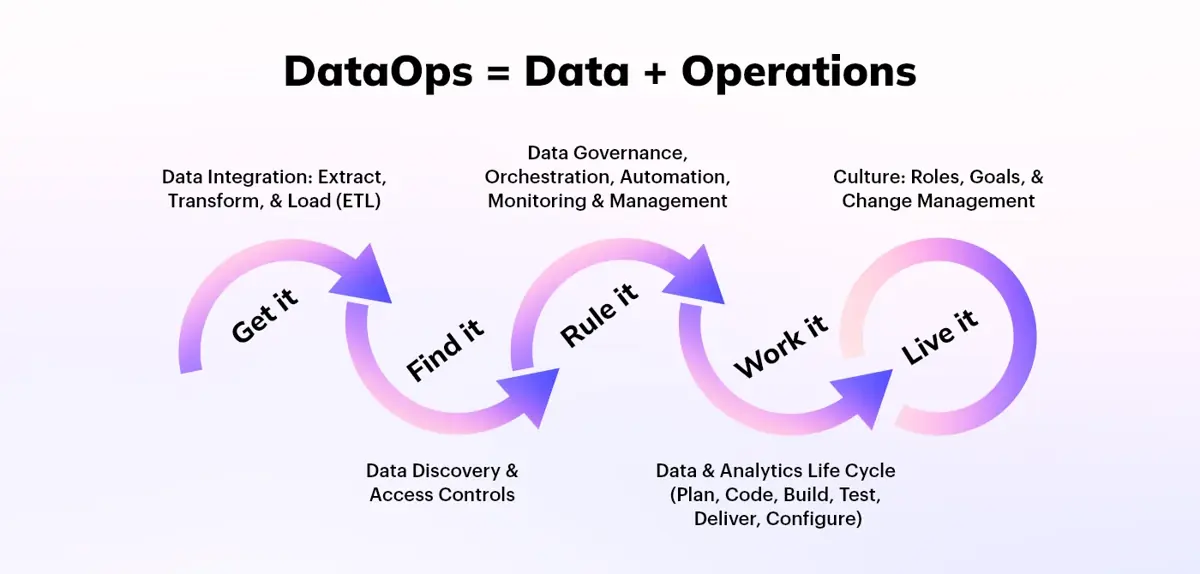
Here’s how DataOps impacts data management:
1. Increased Agility and Speed: DataOps is all about quick and constant delivery. This helps organizations react fast to changes and needs. With automated processes and breaking down barriers, DataOps ensures that data is always ready for analysis, making decisions happen faster.
2. Improved Data Quality and Trust: DataOps puts a big focus on good data rules and quality through automated testing and monitoring. This builds trust in the data. Users can be sure they’re working with correct and reliable information.
3. Enhanced Collaboration and Communication: DataOps breaks down walls by encouraging teamwork between data teams, developers, and business users. This makes sure everyone understands and uses data well.
4. Efficient and Cost-Effective: By using automation and making processes smoother, DataOps cuts down on manual work and makes things more efficient. This means less money and time spent on managing and analysing data.
5. Making Data Accessible: DataOps encourages easy access to data and analytics tools. This lets users explore and understand data on their own, leading to insights across the organization.
DataOps changes data management from a slow and separated process into a group effort that’s quick, efficient, and helps organizations make the most of their data for a competitive edge in today’s data-focused world.
Key Aspects of DataOps
DataOps is more than just a single tool or process; it’s a holistic approach that brings together various components to make data management solutions efficient and reliable. Here are some crucial aspects that make DataOps effective:
1. Automation
DataOps minimizes manual work by automating tasks like data ingestion, transformation, processing, and deployment. This speeds up the process, reduces errors, and ensures quicker delivery.
2. Collaboration and Communication
DataOps creates a collaborative space where data engineers, analysts, and business users work together smoothly. This promotes a better understanding of data needs and encourages sharing knowledge among teams.
3. Continuous Integration and Continuous Delivery (CI/CD)
Similar to software development, DataOps follows CI/CD practices. It continuously integrates code changes, tests data pipelines, and deploys updates efficiently. This allows for quick iterations and faster delivery of data insights.
4. Data Quality Management
DataOps places a high importance on data quality by conducting checks at different pipeline stages. This ensures accurate, consistent, and complete data, supporting reliable decision-making.
5. Monitoring and Observability
DataOps prioritizes continuous monitoring of data pipelines to identify and address issues promptly. This involves keeping an eye on data flow, performance metrics, and potential errors for proactive problem-solving.
6. Infrastructure as Code (IaC)
Managing data infrastructure is automated with IaC, which configures data warehouses, databases, and other resources. This guarantees consistency, reproducibility, and easier management of data infrastructure.
7. Version Control
Version control systems track changes to data pipelines and code, making it easy to roll back changes and encouraging collaboration among teams. This ensures transparency and allows reverting to previous versions when needed.
These key aspects work together in DataOps to simplify data management, allowing organizations to fully leverage their data for informed decision-making and achieving business goals.
DataOps vs. DevOps
In tech, there are two important methods: DevOps and DataOps. They are crucial for creating software and handling valuable data. Although they both focus on teamwork and automation, they have different roles. DevOps services ensures software is made and delivered quickly. Meanwhile, DataOps concentrates on organizing and using data efficiently for valuable insights.
Let’s explore a straightforward comparison to understand their key differences.
Aspect | DevOps | DataOps |
|---|---|---|
| What It Does | DevOps makes sure that when we create software, it happens quickly, smoothly, and is reliable. | DataOps ensures that data is handled efficiently from the moment it’s collected to when it’s used for making decisions. |
| Stakeholders | DevOps involves the folks who write code (developers), those who manage the technical stuff (IT and operations teams), and those who make sure the software works correctly (Quality Assurance). | DataOps involves people who deal with data, like data engineers who organize it, data scientists who analyse it, and other data-focused roles. |
| Outcomes | DevOps aims to get software out into the world fast and make sure it works well. | DataOps wants to provide reliable and valuable insights from data, making it useful for decision-making. |
| Key Actions | In DevOps, there’s a lot of emphasis on writing code quickly, testing it automatically, and using automated processes to deploy it. | DataOps focuses on automating the way data moves around, ensuring its quality, and managing how it’s used. |
| How They Work Together | DevOps can use insights from DataOps to inform how they build and improve software. | DataOps can benefit from DevOps practices, like automation, to make data-related processes more efficient. |
| Choosing One | If the main goal is to deliver software quickly and reliably, DevOps is the way to go. | If the main focus is on managing and using data effectively, then DataOps is the better fit. However, many organizations find value in combining both for a holistic approach. |
How DataOps Works: A Collaborative Approach to Data Management
DataOps functions through a collaborative and iterative cycle, bringing together different teams and processes involved in the data lifecycle. Here’s a breakdown of its key phases:
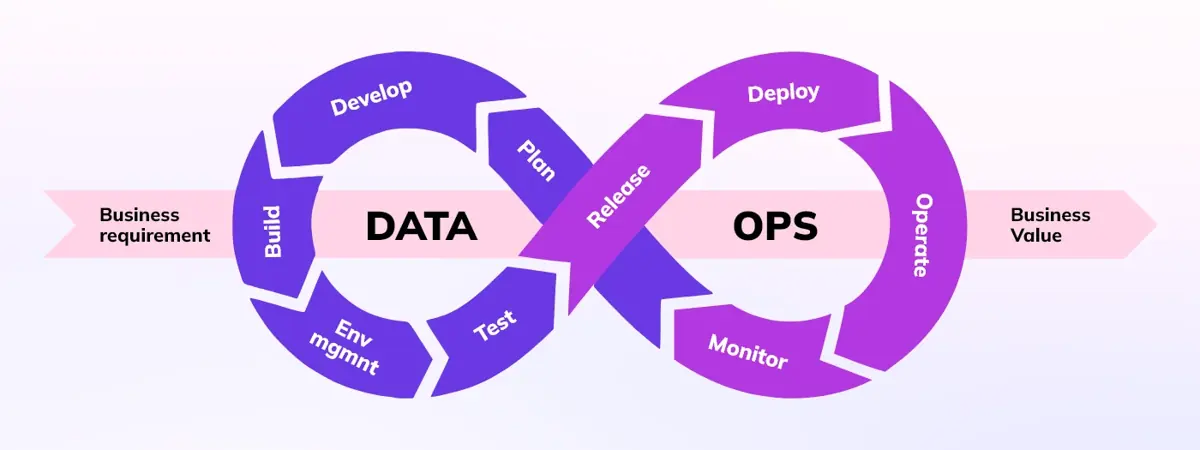
1. Planning and Collaboration
Team Collaboration: Experts like data engineers, analysts, and stakeholders work together to define data needs, identify sources, and set quality standards for effective collaboration.
Version Control: Codes and data changes are systematically tracked to maintain consistency and traceability throughout the pipeline, ensuring a reliable and organized workflow.
Automation Tools: Utilization of specialized tools facilitates the efficient streamlining of data extraction, transformation, and loading processes for enhanced productivity and effectiveness.
2. Development and Testing
Modular Design: Breaking down data pipelines into smaller components enables faster development and easier maintenance, promoting simplicity and efficiency in the design.
Continuous Integration and Delivery (CI/CD): Consistent integration of code changes, automated testing, and deployment in different environments ensures a smooth and continuous development process.
Data Testing: Integration of data quality checks in the pipeline safeguards data accuracy, completeness, and consistency, fostering trust in the overall data processing.
3. Deployment and Monitoring
Automated Infrastructure: Automating infrastructure provisioning and configuration minimizes manual errors and intervention, contributing to a more streamlined and error-resistant deployment process.
Real-time Monitoring: Continuous monitoring of data pipelines and data quality allows for the swift identification and resolution of issues, ensuring a reliable and responsive data environment.
Alerts and Notifications: Automated alerts promptly notify teams of anomalies or potential issues in the data pipeline, allowing for immediate attention and problem resolution.
Learn More: 5 Best and Proven Test Data Management Practices
4. Feedback and Optimization
Performance Feedback: Constant monitoring and analysis of data pipeline performance metrics provide valuable insights for identifying optimization opportunities and enhancing overall efficiency.
Continuous improvement: The data pipeline undergoes continuous improvement based on feedback and analysis, ensuring ongoing enhancements to its performance, reliability, and overall effectiveness.
Team Communication: Regular communication and feedback loops are established between different teams to maintain alignment, share insights, and collaboratively address emerging challenges in the data management process.
Benefits of DataOps
DataOps, inspired by successful DevOps principles, aims to make data management smoother by encouraging teamwork, automation, and adaptability. It breaks down barriers between data teams, ensuring a seamless flow of data from acquisition to analysis. This, in turn, brings numerous benefits to your data management:
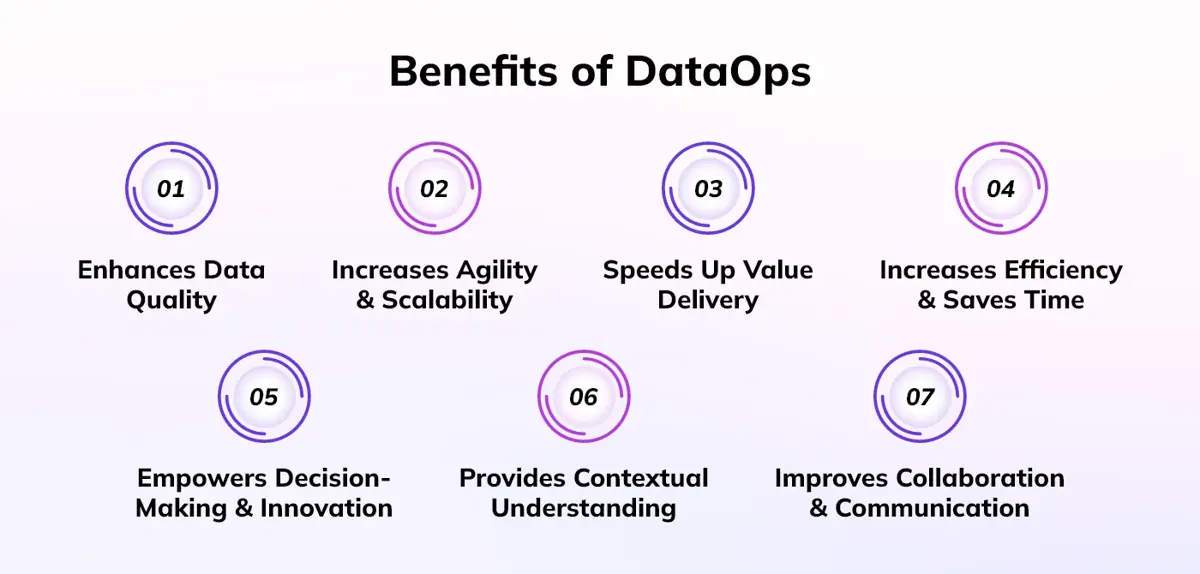
1. Enhanced Data Quality
DataOps automates tasks like cleaning, transforming, and validating data, reducing errors and ensuring reliability. Continuous monitoring and feedback loops identify and address data quality issues early, fostering trustworthy information for confident decision-making.
2. Increased Efficiency and Time Savings
Traditional data management involves manual steps and long development cycles. DataOps introduces automation and continuous integration, cutting down time and resources needed for data preparation, integration, and analysis. This allows your team to focus on strategic initiatives and derive insights faster.
3. Improved Collaboration and Communication
DataOps creates a collaborative environment by breaking communication barriers between different data teams. Data engineers, analysts, and stakeholders work seamlessly, ensuring everyone is on the same page, and data is readily accessible.
4. Increased Agility and Scalability
Adopting agile principles, DataOps helps your organization quickly adapt to changing data needs and business requirements. This is crucial in today’s dynamic environment, where data volumes and use cases constantly evolve. DataOps also enables easy scaling of data pipelines to handle growing volumes and user demands.
5. Better Decision-Making and Innovation
The true power of DataOps lies in enabling confident, data-driven decision-making. By ensuring cleaner, more reliable datasets, organizations gain deeper insights while also unlocking the benefits of synthetic data to enhance testing, analytics, and innovation. Along with improved efficiency and agility, DataOps creates a strong foundation for sustainable growth and competitive advantage in today’s data-centric landscape.
6. Faster Value Delivery
DataOps streamlines data pipelines, automating tasks and promoting continuous integration. This accelerates the delivery of valuable insights to business stakeholders. Instead of waiting months for reports, timely and actionable information enables faster decision-making and quicker responses to market changes.
7. Contextual Understanding
DataOps goes beyond moving data; it encourages a deeper understanding of the “why” behind the data. By capturing and integrating metadata, DataOps provides context, making it easier to interpret and draw meaningful insights. This allows organizations not just to see what’s happening but also to understand the underlying reasons and make informed decisions based on the complete picture.
The Future of DataOps
DataOps, short for data operations, is a set of practices aiming to make working with data more efficient through collaboration and automation. Its goal is to optimize data management for technologies like artificial intelligence, machine learning, and deep learning, leading to better business outcomes.
Anticipated future of DataOps:
1. Frictionless Access to Data: DataOps wants to make accessing data quick and error-free. By automating data governance and improving data pipelines, it ensures that data is readily available. This is crucial for speeding up applications in AI and ML. The global AI market is predicted to grow significantly in the coming years.
2. Team Collaboration and Automation: DataOps emphasizes teamwork among various teams like data engineers, data scientists, and business analysts. Automation is used to simplify data workflows, reduce manual work, and minimize errors. This results in quicker delivery of analytics and faster innovation.
Considering the huge volumes of data companies deal with daily, automation becomes vital. According to the Definitive Data Operations report, an average enterprise manages over 5000 datasets, with a ratio of data consumers to data engineers ranging from 5 to 30.
3. Extension to XOps: The concept of DataOps is expanding to cover XOps, which includes tasks related to data engineering such as building, managing, and scaling data pipelines.
XOps also encompasses capabilities for data extraction, integration, transformation, and analysis. This extension aims to shorten system development cycles and ensure high-quality software.
4. Continuous Growth and Evolution: The use of DataOps is expected to grow and evolve in the coming years.
Factors such as technological advancements and shifts in industry trends will influence this growth. For example, the global DataOps platform market is projected to reach a value of $10.9 billion by 2028.
Conclusion
In summary, DataOps is a modern approach that combines the best methods from data management, DevOps, and Agile practices. Its goal is to make the creation, deployment, and upkeep of data systems more efficient, resulting in quicker and more dependable data insights.
Using DataOps can greatly improve how you handle data by enhancing the quality and speed of data analysis, promoting better teamwork between teams, and reducing the time it takes to get new insights. It’s also helpful for staying compliant with regulations and ensuring data privacy.
Looking forward, the future of DataOps in data management looks bright. As businesses increasingly recognize the value of making decisions based on data, the need for fast and reliable data pipelines will grow.
DataOps, with its emphasis on automation, teamwork, and ongoing improvement, is well-suited to meet these needs. It’s likely to become a crucial part of data strategies in various industries, driving innovation and providing a competitive edge.
Is Data Management a Mess? ️ DataOps simplifies it ALL. Get started today & see the difference!
Frequently Asked Questions
Get the weekly updates on the newest brand stories, business models and technology right in your inbox.