MarTech is the convergence of marketing and technology, where the human mind meets with machine intelligence. This discipline is centered on data-driven automation to deliver tangible outcomes.
MarTech means using technology to modernize and optimize marketing processes. It is the cornerstone of modern marketing. With the help of several tools, platforms, and software solutions, marketers can analyze data, automate tasks, and engage with valuable customers effectively. It helps businesses understand their audience better, provide personalized experiences, and measure the overall impact.
Marketing Tech provides tools for almost every aspect of marketing, from creating and managing content to handling customer relationships and automating tasks. It’s like having a toolkit for marketers, where each tool has a specific job. When used together wisely, these tools can greatly improve how efficiently and effectively marketing works.
Why MarTech Matters?
MarTech is the future of technology! Marketing gets a tech makeover, which clears marketing meets technology for achieving goals. As tech in marketing becomes more influential day by day, marketers are increasingly reliant on technology for gathering powerful insights. It assists leading brands in keeping up with the constantly changing customer journeys.
It’s MarTech that makes the customer journey digital. Using marketing technology, marketing specialists can effortlessly understand user opinions and influence every touchpoint. This scales up and down their marketing efforts accordingly. Furthermore, marketing technology lets individuals communicate better and work more effectively with partners and customers, leading to better relationships and improved customer interactions.
Evolution of MarTech
The idea of MarTech has come a long way. It started with simple tools like email marketing and basic analytics. Now, it includes advanced solutions like CRM systems, marketing automation platforms, and data management tools.
Additionally, it is characterized by a diverse ecosystem of tools and the latest technologies including AI/ML, AR/VR, data analytics, and more. This evolution lets marketers move beyond traditional methods to data-driven strategies that deliver better results.
Components of MarTech
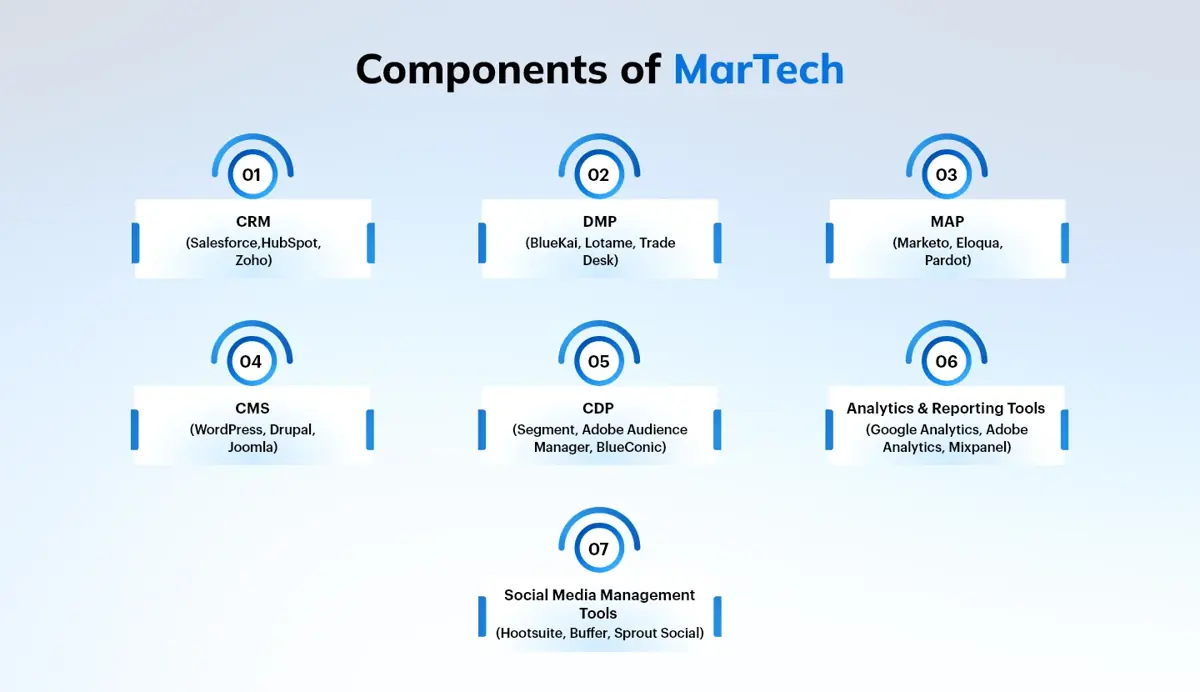
Here are the key components of MarTech that work together to help streamline marketing efforts.
Customer Relationship Management
CRM manages all aspects of customer interactions and data. It gives insights into customer preferences, behavior, and demands. Examples are Salesforce, HubSpot, and Zoho. For agencies managing multiple clients, the right marketing agency software streamlines CRM, campaigns, automation, and reporting in one workflow.
Data Management Platform
DMP collects, analyzes, and manages data from websites, social media, and other sources. They offer insights into customer behavior and preferences, helping marketers make informed decisions. Examples are BlueKai and Lotame.
Marketing Automation Platform
MAP streamlines repetitive tasks and automates the process on a set frequency. It can automate email campaigns and social media posts, and deliver a more personalized experience to the audience. Examples are Marketo, Eloqua, and Pardot.
Content Management System
CMS helps create, manage, and optimize digital content. Using these systems, marketing geeks can seamlessly publish content on websites and social media platforms. Examples are WordPress, Drupal, and Joomla.
Customer Data Platform
CDP combines data from different sources to create a single customer profile. This gives marketers a complete view of each customer, helping them deliver personalized experiences and boost engagement. Examples are Segment and BlueConic.
Analytics and Reporting Tools
The analytics and reporting tools can easily analyze and monitor campaigns to understand audience interactions. It can produce in-depth performance analysis based on website traffic, customer engagement, and conversion rates. Examples are Mixpanel, Adobe Analytics, and Google Analytics.
Social Media Management Tools
These tools help businesses manage and improve their social media. They let marketers schedule posts, track interactions, and analyze performance on various platforms. Examples are Hootsuite, Buffer, and Sprout Social.
Types of MarTech
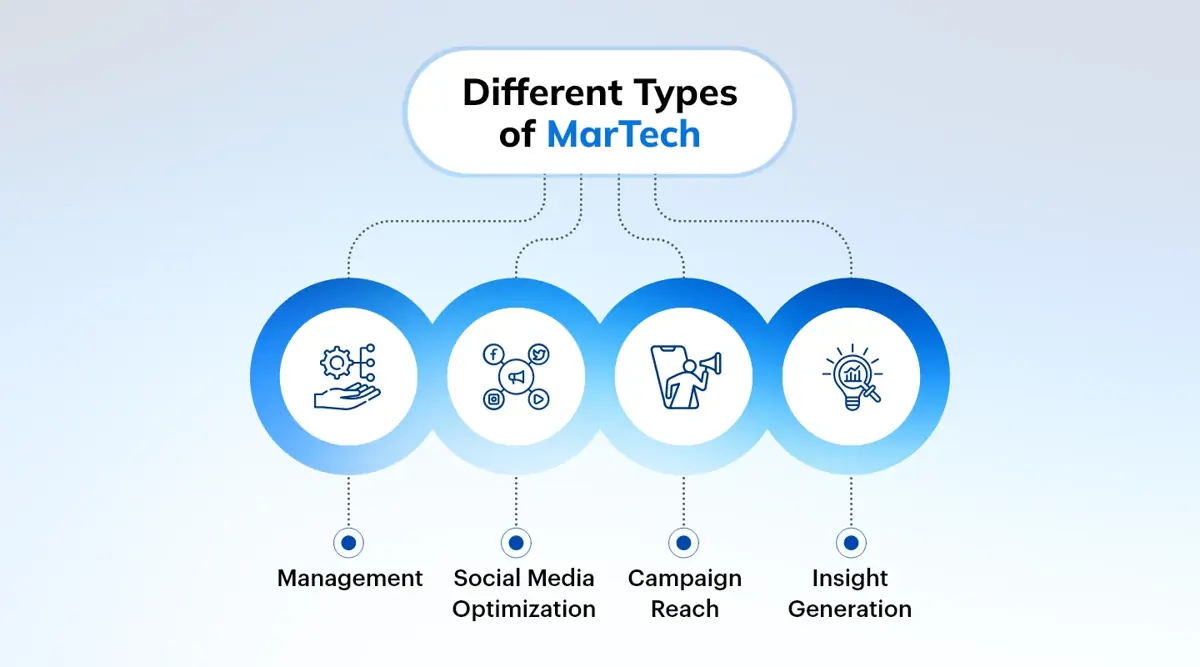
There are four types of MarTech techniques that do wonders in the digital world. Have a look:
Management
In Marketing Tech, management tools cover content management, vendor organization, product management, budgeting, and talent management. Good management systems let businesses quickly access marketing materials, make smart recommendations, and keep accurate reports. It helps boost the overall marketing strategy.
Social Media Optimization
Organizing and measuring social media efforts might involve managing influencers, using user-generated content, and handling customer relationships. Automation systems help you connect with online communities more efficiently.
Campaign Reach
This type of Marketing Tech helps run brand campaigns and reach audiences through remarketing. It focuses on building and strengthening B2B and B2C relationships and creating new ones. It leads to overall increased engagement and loyalty through targeted efforts.
Insight Generation
Analytics tools like Amazon Attribution help marketers see how their campaigns, content, and social media are performing. These tools highlight trends, simplify complex data, and help make better decisions to improve marketing strategies.
Advantages of MarTech
Here are the benefits of MarTech for your business growth.
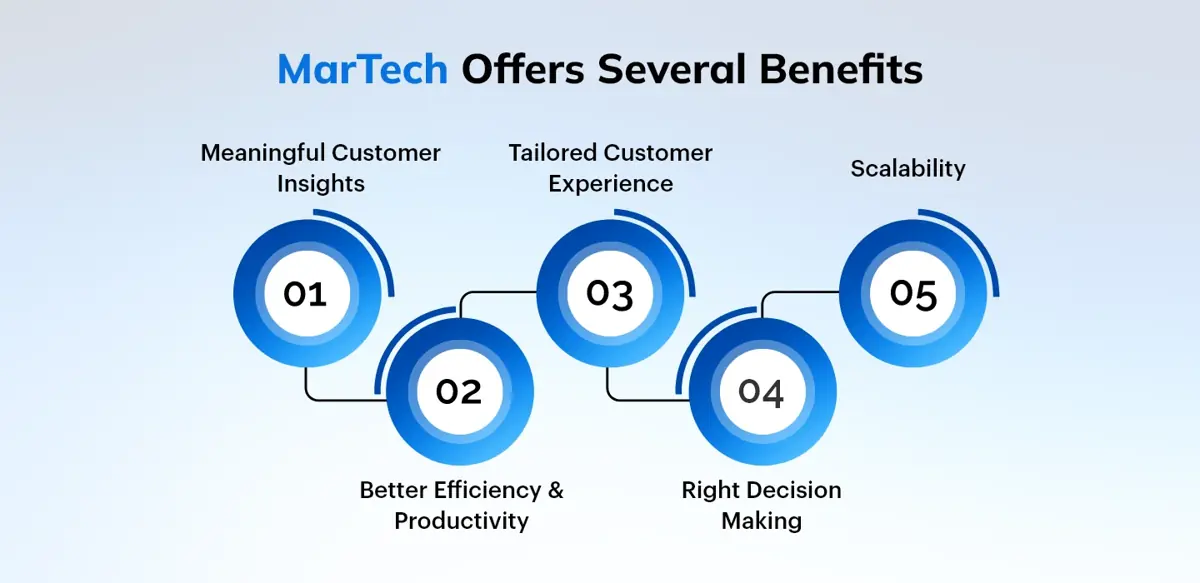
Meaningful Customer Insights
MarTech tools help businesses see what their customers like and how they behave, so they can better understand their audience and improve their marketing strategies.
Better Efficiency & Productivity
Automation tools cut down on manual tasks, letting marketers focus on strategy. This boosts productivity and speeds up marketing campaigns.
Tailored Customer Experience
Marketing Tech helps businesses offer personalized experiences to customers. Using data insights, marketers can create targeted content and offers that connect with their audience.
Right Decision-Making
Data analytics tools give insights that help marketers make smart decisions. By analyzing campaign results and customer behavior, businesses can improve their strategies and get better results.
Scalability
The marketing technology solutions grow with a business. As companies expand, they can use advanced tools to handle more data and run more complex marketing campaigns.
Remember, to get most of the benefits, you need to choose the right tools that work. Research and find out different Marketing Tech tools according to their features, compatibility, and cost. Look for solutions that integrate well with your existing systems and provide the functionalities you need.
The Marketing Tech tools you choose depend on your business type, products, needs, and goals. If choosing just one tool is challenging, don’t worry. MarTech “stacks” allow you to combine multiple tools. Let’s explore what this means for your marketing automation.
Brief About MarTech Stack
A MarTech stack is a marketing technology toolkit (containing interconnected tools) that builds and executes successful campaigns. This set of tools streamlines marketing operations to achieve final objectives.
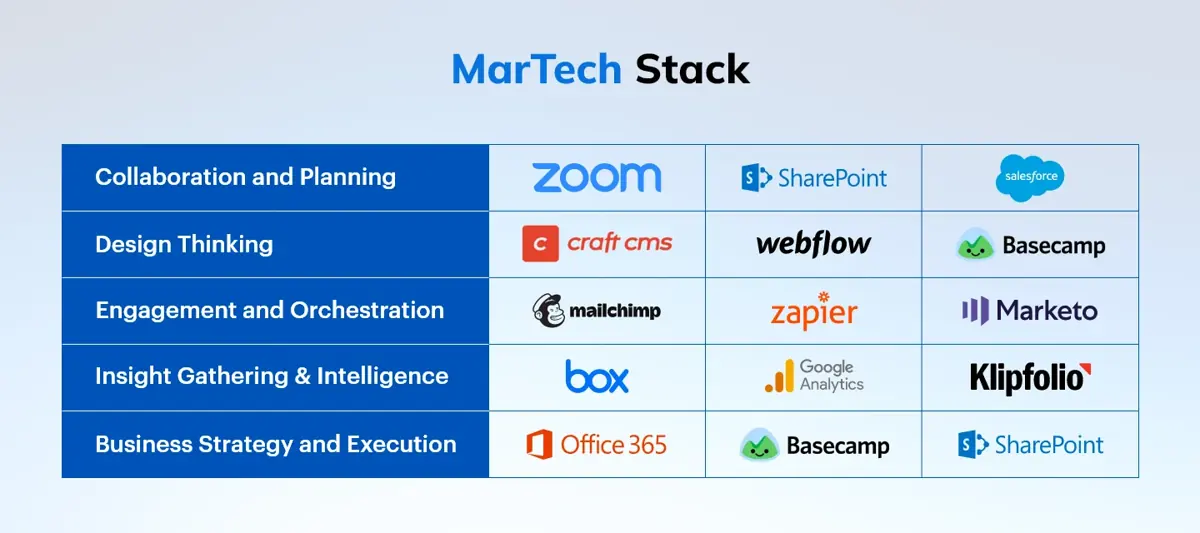
In addition, it helps customize your processes to better meet your customers’ behaviors and get a better return on investment.
- A full MarTech stack helps attract, engage, and understand your customers while driving conversions.
- It ensures you connect with the right audience at the right stage of the purchase funnel.
- Most stacks include a Digital Asset Management (DAM) solution that acts as the central hub
- A DAM manages contents and assets, and also, maintains consistency across all marketing touchpoints. A brochure maker can turn static PDFs into interactive, trackable flipbooks with multimedia, lead forms, and CRM integrations.
- Once your Marketing Tech stack is built, you need to manage it continuously to ensure the tools work well together.
Process to Build a MarTech Stack
To build the right marketing tools, first define your goals and what you want to measure, such as objectives and key results (OKRs). This is the starting point. We’ll cover the rest of the steps next.
- Marketing Analytics – Set Clear Goals & KPIs
Start by deciding on the outcome you want. This depends on certain marketing metrics such as business model, brand type, and sales cycle length. Setting goals or KPIs helps you stay on track. Reviewing them regularly lets you adjust your strategies to keep your marketing aligned with your business goals and improve over time. - Define Unique Value Proposition
As you build out that goal, consider the unique value of your brand. How do you stand out? What makes your company different from others in your sector? Understanding these differentiators will help you choose the right Marketing Tech tools. Leveraging these unique aspects can boost customer engagement and loyalty, driving growth and success. - Identify Core Strengths and Capabilities
Before exploring new opportunities for marketing and technology purposes, it’s significant to assess your current marketing tools. Check if the systems are underusing the tool or if it could be used differently. This helps avoid redundant efforts. Also, think about integrating these tools in new ways to boost efficiency and growth. This way, you can uncover hidden potentials and make better use of what you already have, making new ventures more effective. - Map the Customer Journey
Build your marketing stack based on your customer’s unique journey down the marketing funnel. You need to understand these touchpoints before you can impact them. This means analyzing and monitoring constantly to keep your strategies effective and adaptable to changing customer behaviors.
Future Trends in MarTech
The MarTech field is dynamic in nature! It changes with the modern trends and technologies in the market. Revolutions like AI, ML, and data analytics are transforming the way people used to do marketing. To use the newest marketing technology tools and strategies, you have to keep yourself updated.
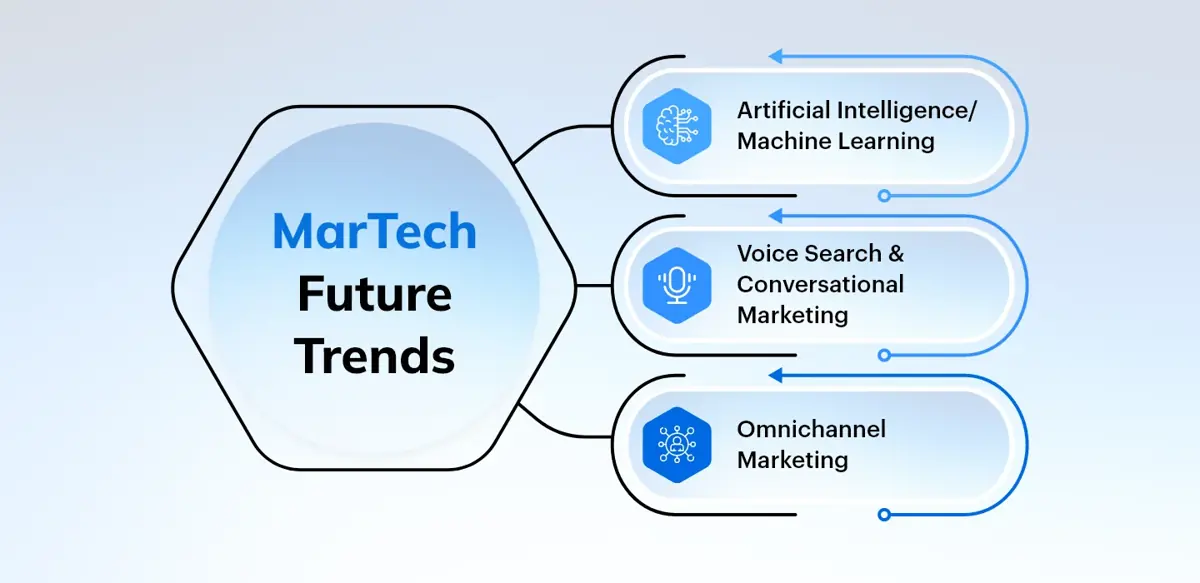
Artificial Intelligence/Machine Learning
AI/ML in marketing are new tech advancements increasingly improving marketing strategies. It enables chatbots, predictive analytics, and personalized content recommendations.
Voice Search and Conversational Marketing
Voice search and conversational interfaces are pushing MarTech solutions to optimize content for voice queries and enable real-time customer interactions.
Omnichannel Marketing
Omnichannel marketing aims to generate a seamless experience across all channels. MarTech tools are great preferences to support integrated campaigns for a unified experience.
Conclusion
Implementing MarTech means rethinking marketing strategies for better efficiency and success. MarTech changes how businesses take marketing by using technology to get meaningful insights, automate grunt business work, and build personalized experiences. Moreover, it is essential to stay updated on MarTech trends and tools.
Use MarTech for Effective and Personalized Customer Experiences.
Get the weekly updates on the newest brand stories, business models and technology right in your inbox.